Yuxi = Cloud Agents + Knowledge RAG,Yuxi 是一个可私有部署的多租户知识智能体平台。自定义智能体,权限可控,沉淀企业轨迹。它把知识库检索、知识图谱、LangGraph 多智能体编排、MCP/Skills、沙盒工具和权限管理放进同一个工作区。让每个用户都拥有一个云端 Codex。
项目主页 · 快速开始 · 演示视频 · 版本记录 · English


Yuxi 是面向需要企业自部署的多用户 Agent 产品,且需要自己掌握数据、模型和权限的团队:
| 赞助商 | 介绍 |
|---|---|
 |
Fluxion AI面向个人开发者、技术团队与企业,通过统一API接入并管理全球主流AI模型;通过多线路动态调度提升可用性,模型表现、响应时间与费用透明可查。根据不同模型与线路,API调用成本较官方或基准价格可降低40%—98%。专属链接注册 获 $7 API 额度 |
语析(Yuxi)完全基于 Docker 启动,服务和中间件主要包括:LangGraph、Vue、FastAPI、Milvus、Neo4j、PostgreSQL、MinerU、PaddleOCR。
安装 Docker Engine 和 Docker Compose,并准备一个可用的大模型 API。当前仓库默认配置对应 v0.7.3。
git clone --branch v0.7.3 --depth 1 https://github.com/xerrors/Yuxi.git
cd Yuxi

# Linux/macOS
./scripts/init.sh

# Windows PowerShell
.\scripts\init.ps1
初始化脚本会创建 .env、读取 SiliconFlow API Key,并为 JWT、API Key 派生和 Sandbox provisioner 生成独立的安全密钥。也可以手动复制 .env.template 并填写这些值。
docker compose up --build -d
查看服务状态:
docker compose ps
curl --fail http://localhost:5050/api/system/ready
返回的 status 为 ready 后,打开 http://localhost:5173,按页面提示初始化超级管理员并登录。API 文档位于 http://localhost:5050/docs。
从 v0.7.1 或 v0.7.2 升级到当前版本时,不能直接执行 docker compose up。请先阅读生产部署与升级,在停机窗口完成备份和迁移。
Yuxi 把知识进入系统、Agent 执行任务和团队治理放在一条完整链路中。以下按六个核心模块介绍系统能力:
| 模块 | 解决的问题 | 代表能力 |
|---|---|---|
| 统一智能体工作台 | 在一个界面完成提问、执行与交付 | 多轮对话、知识库检索、任务状态、人工审批 |
| 知识库与 RAG | 为回答提供检索内容 | 多格式入库、Embedding/Rerank、检索测试、RAG 评估 |
| 知识图谱与知识导图 | 发现实体关系并浏览知识库文件结构 | 图谱构建、子图浏览、节点详情、文件元数据导图 |
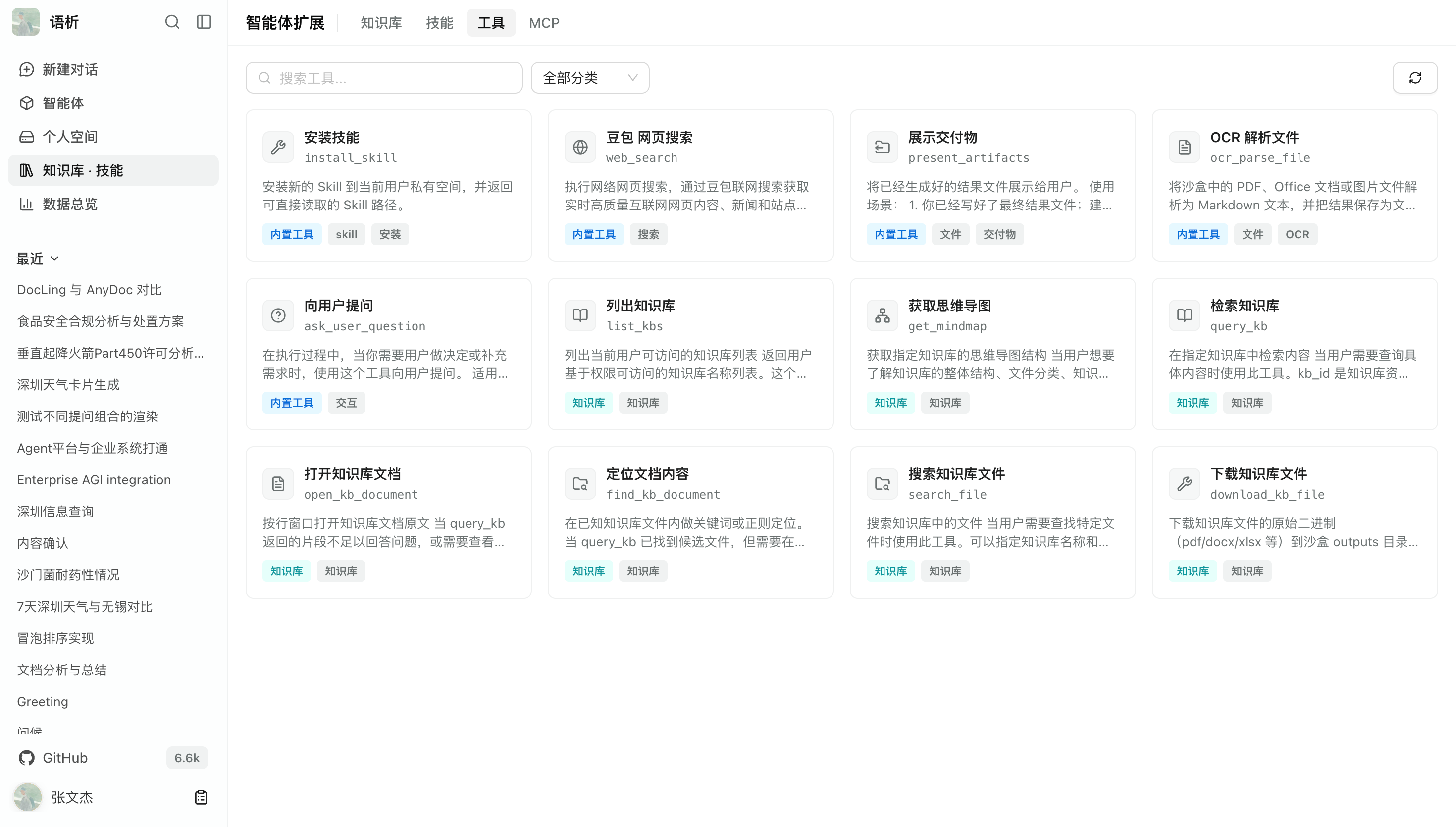
| 多智能体与扩展生态 | 把复杂任务拆给不同角色和工具 | SubAgents、Skills、MCP、Tools、Agent 配置 |
| 沙盒工作区与产物 | 把对话结果变成可继续使用的文件 | 隔离文件系统、文件生成、在线预览、下载 |
| 团队治理与运行管理 | 在多人环境中管理能力、权限和运行状态 | 多租户、用户与部门权限、模型配置、API Key、Dashboard |
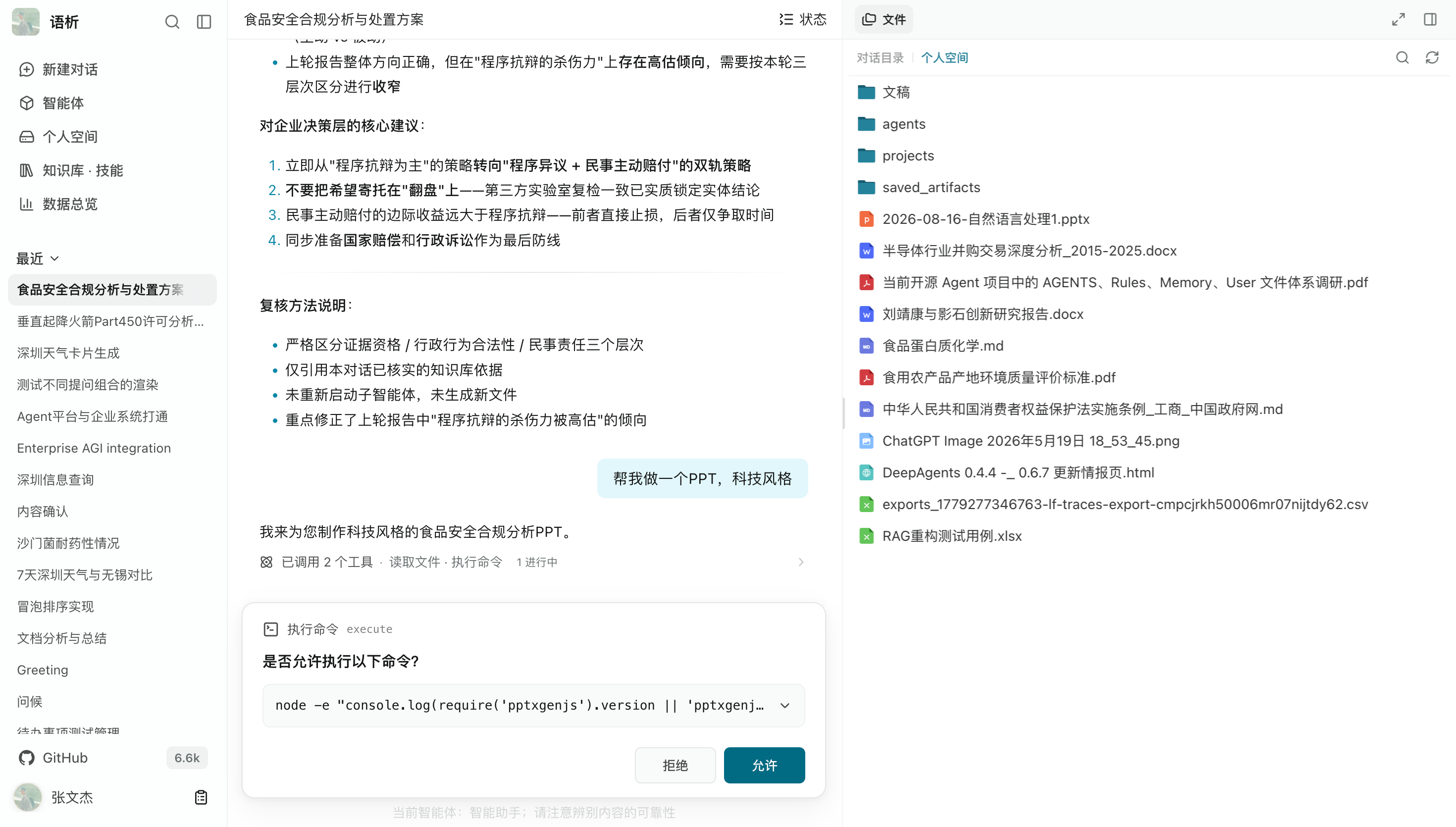
用户可以在同一个对话界面里引用知识库文档、个人文件或扩展 Skill;查看任务执行状态,并在对话中获取回答或生成的文件。
@ 快速引入知识库、文件与特定 Skill。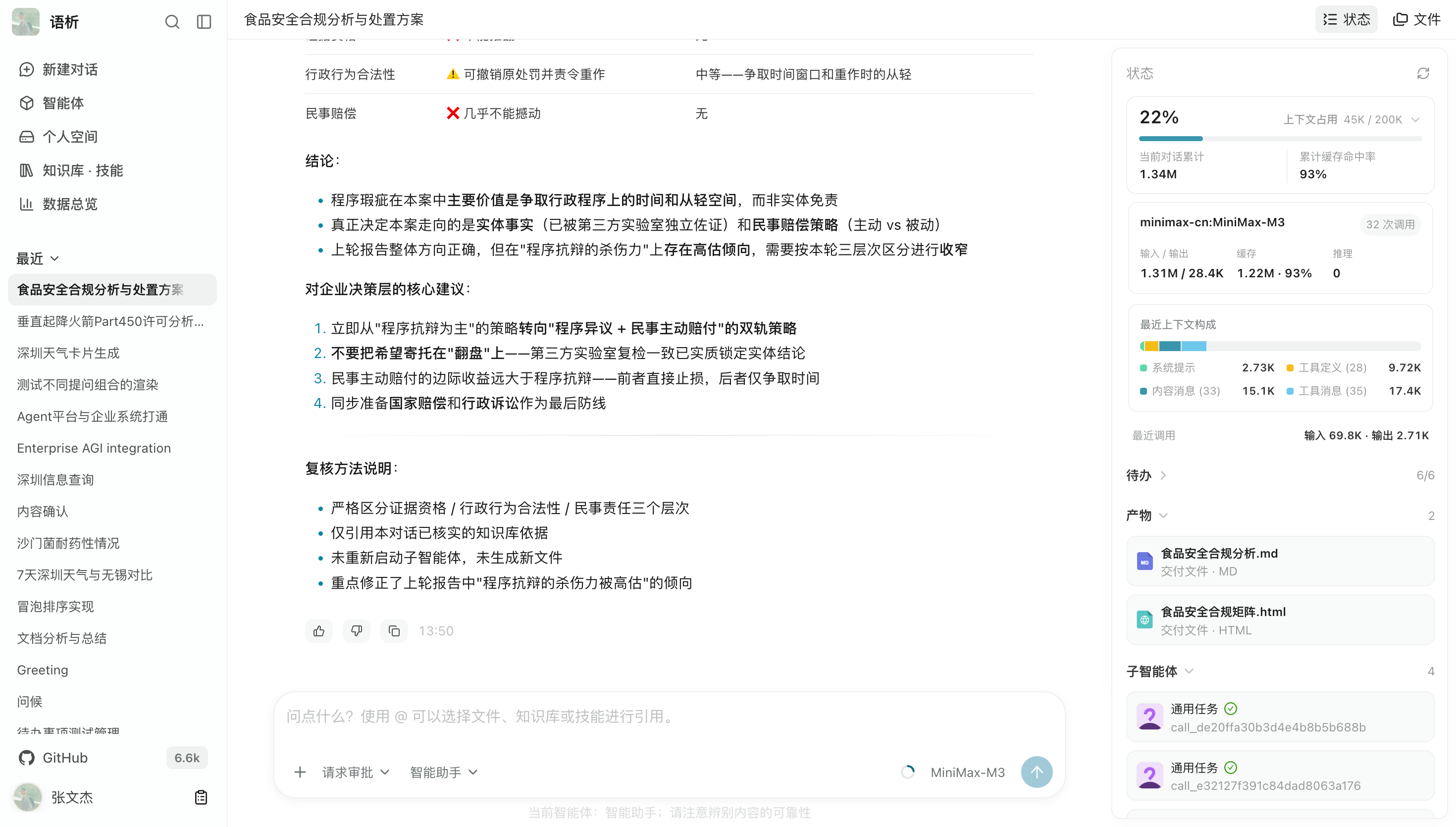
长任务执行状态与过程追踪
后台异步执行复杂任务时,界面会实时呈现智能体的思考链路、步骤计划、子任务状态与工具调用日志,不再让长任务变成黑盒等待。
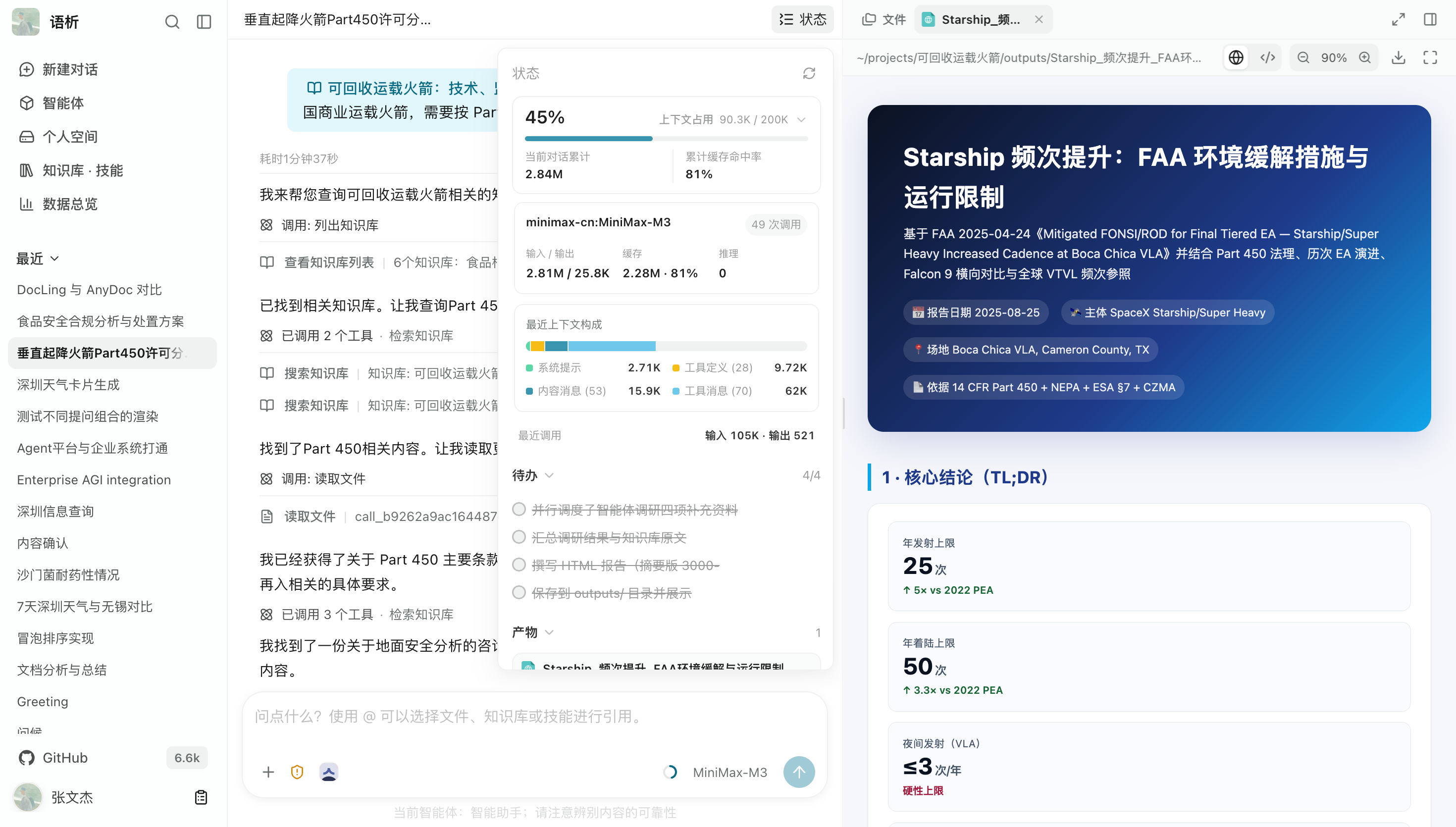
人工审批与交付卡片
在执行涉及修改文件、调用外部高危接口等关键操作时,系统会弹出确认卡片等待人工审批;任务完成后自动汇总生成成果并提供交互式交付入口。
支持将团队各类资料集中管理并解析为结构化知识库。Agent 可以检索相关文档片段,作为回答问题的上下文。
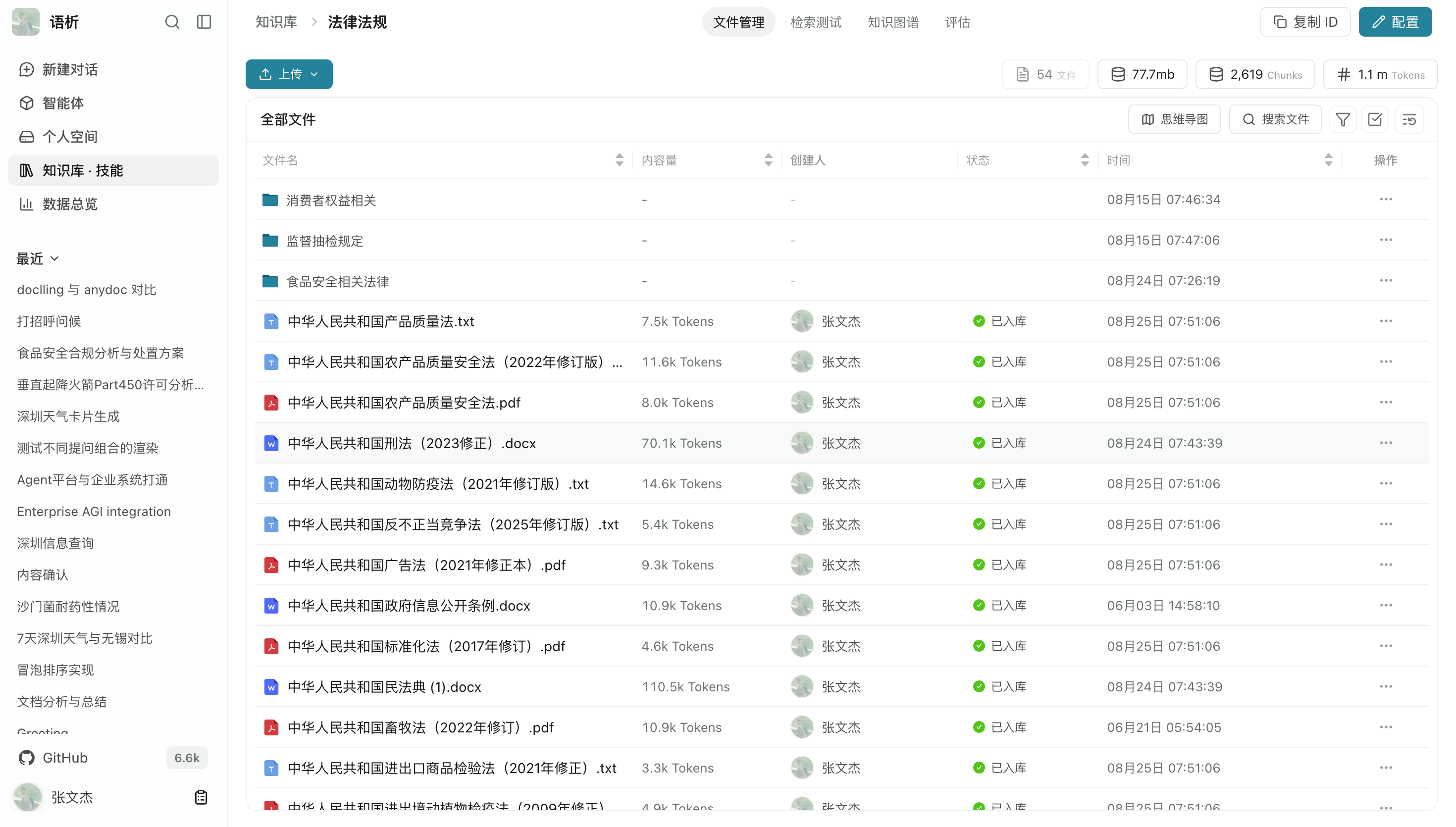
文档解析与切片管理
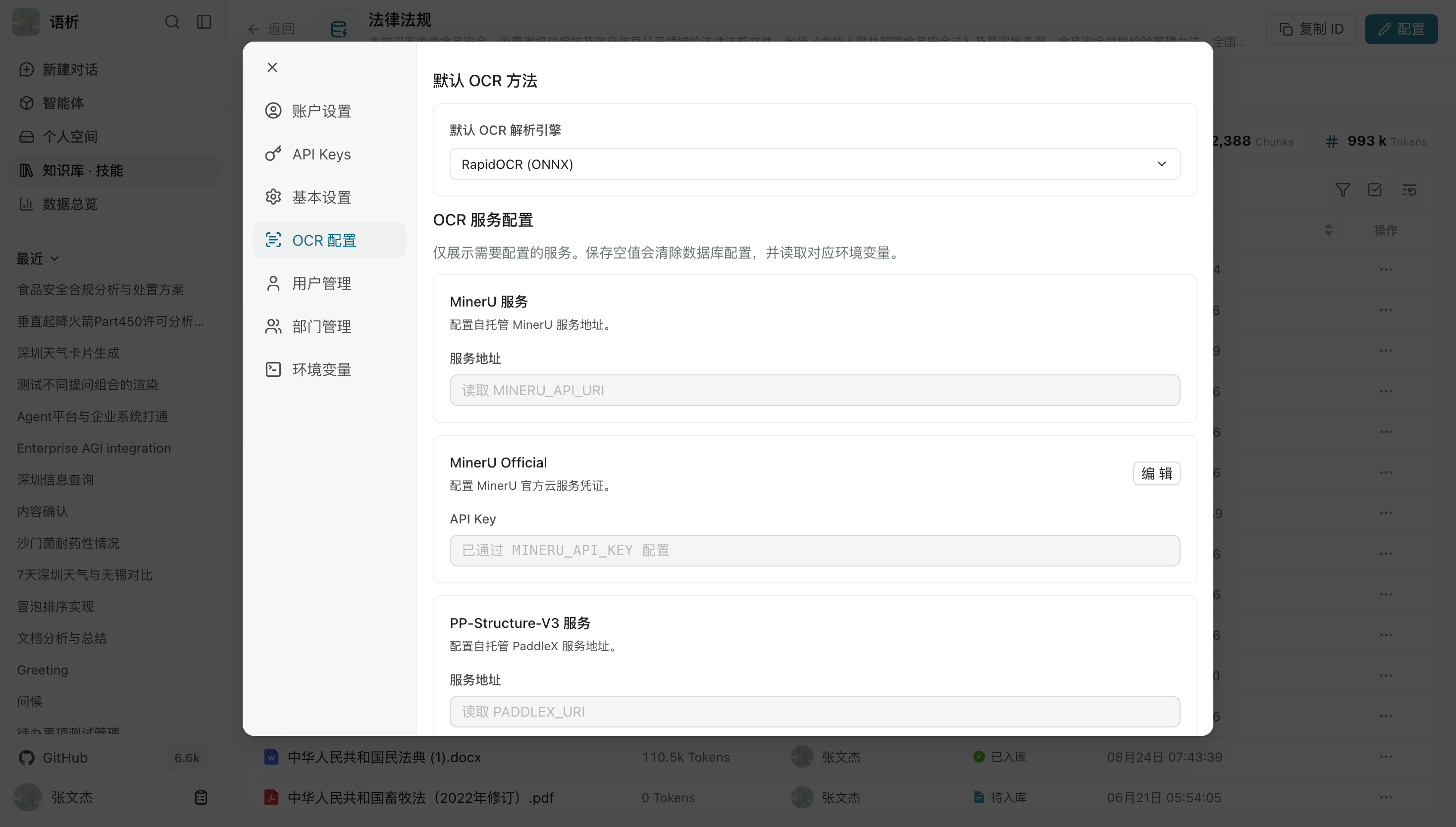
支持 PDF、Word、PPT、Excel、Markdown 等多种常见文档格式。内置 MinerU、PaddleX、RapidOCR 等解析引擎,提取文本、图片和表格内容并切分为 Chunk,生成向量索引供检索使用。
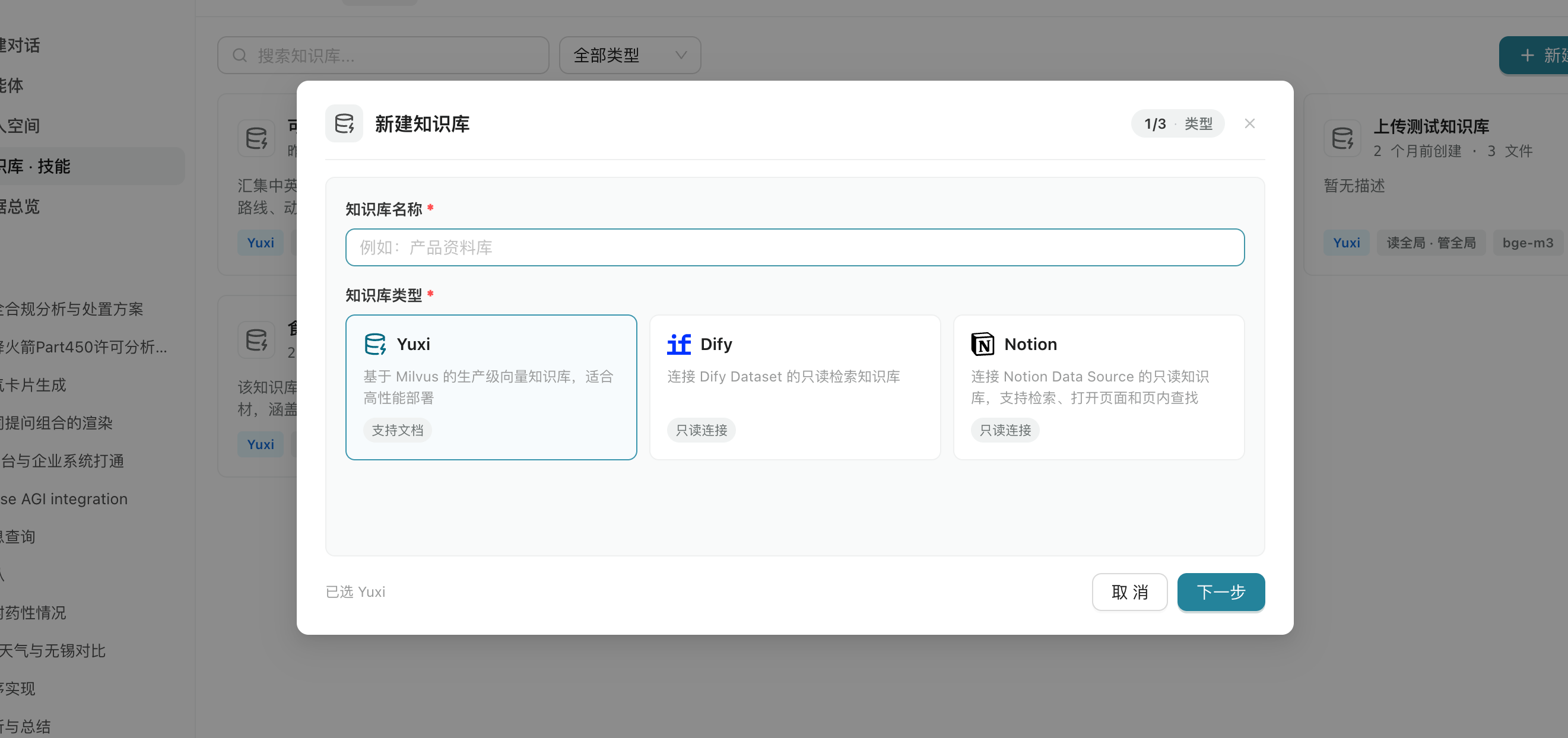
知识库类型与外部数据源
除了开箱即用的本地向量知识库,系统还支持直接连接 Dify、Notion 等外部知识库服务,通过统一检索器供 Agent 调用。
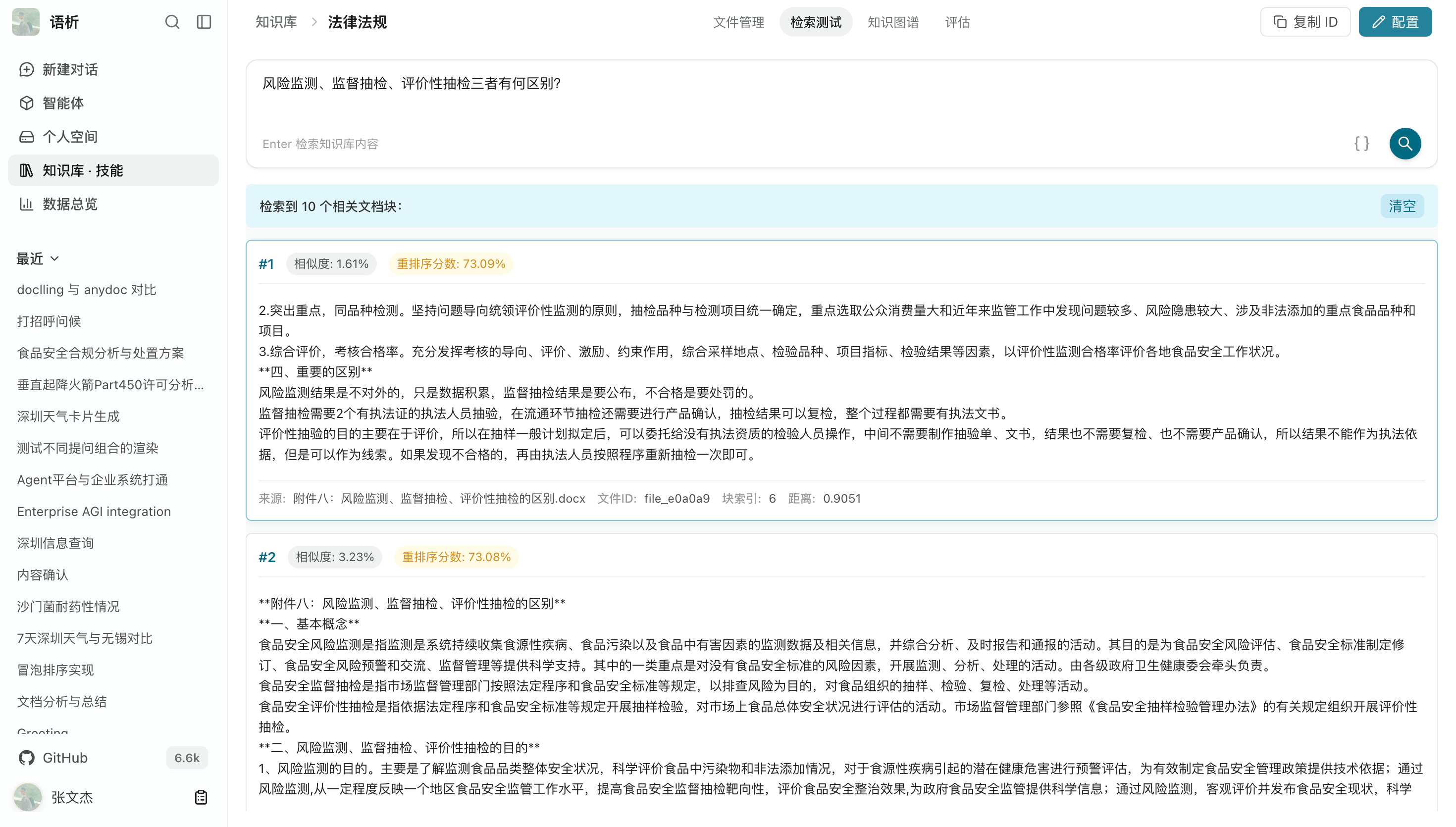
检索测试与重排序(Rerank)
提供直观的检索测试工作台。输入测试 Query 即可实时查看 Embedding 向量初筛得分、混合检索结果以及 Rerank 重排序后的分数变化,方便直观验证召回效果。
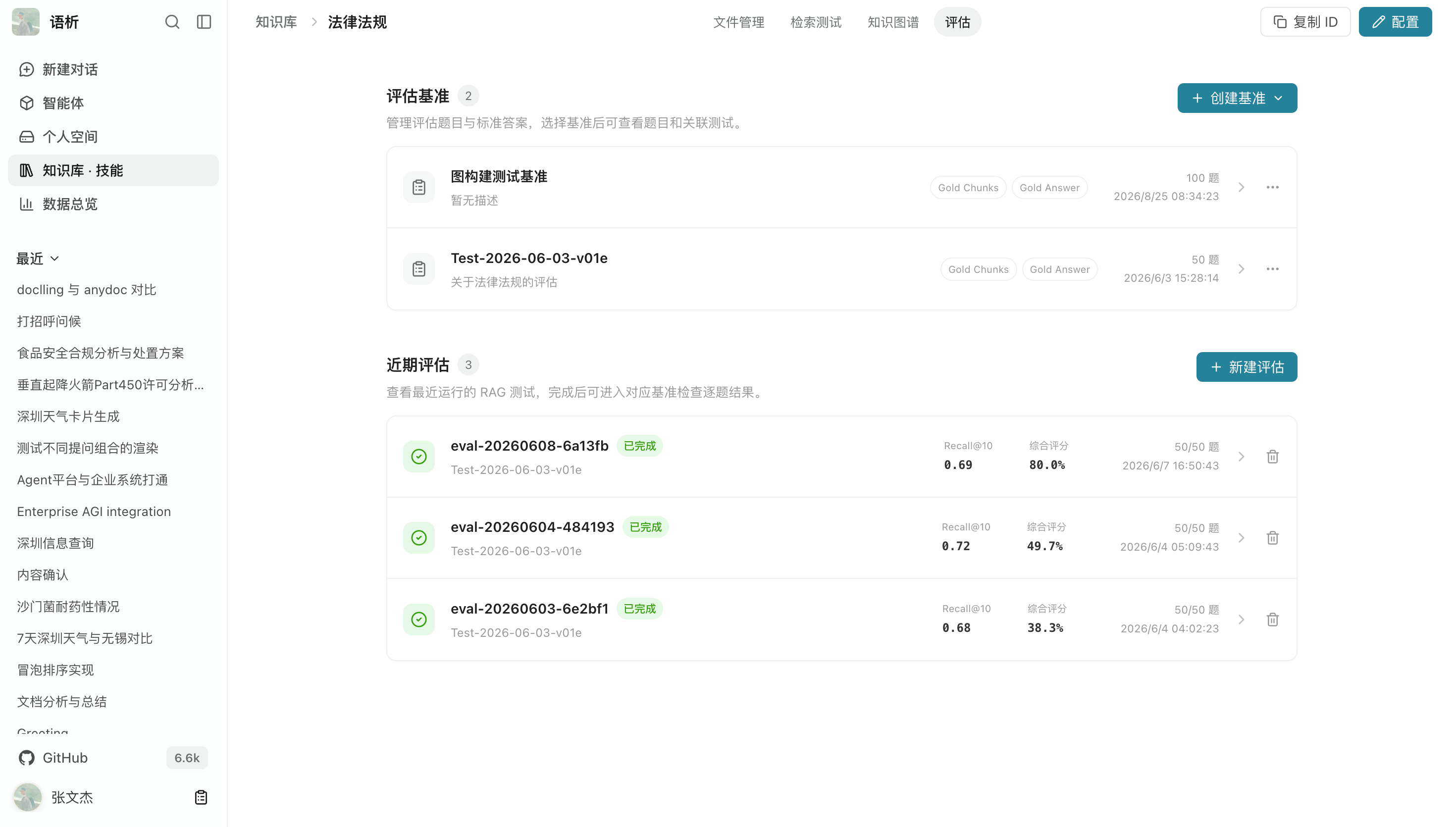
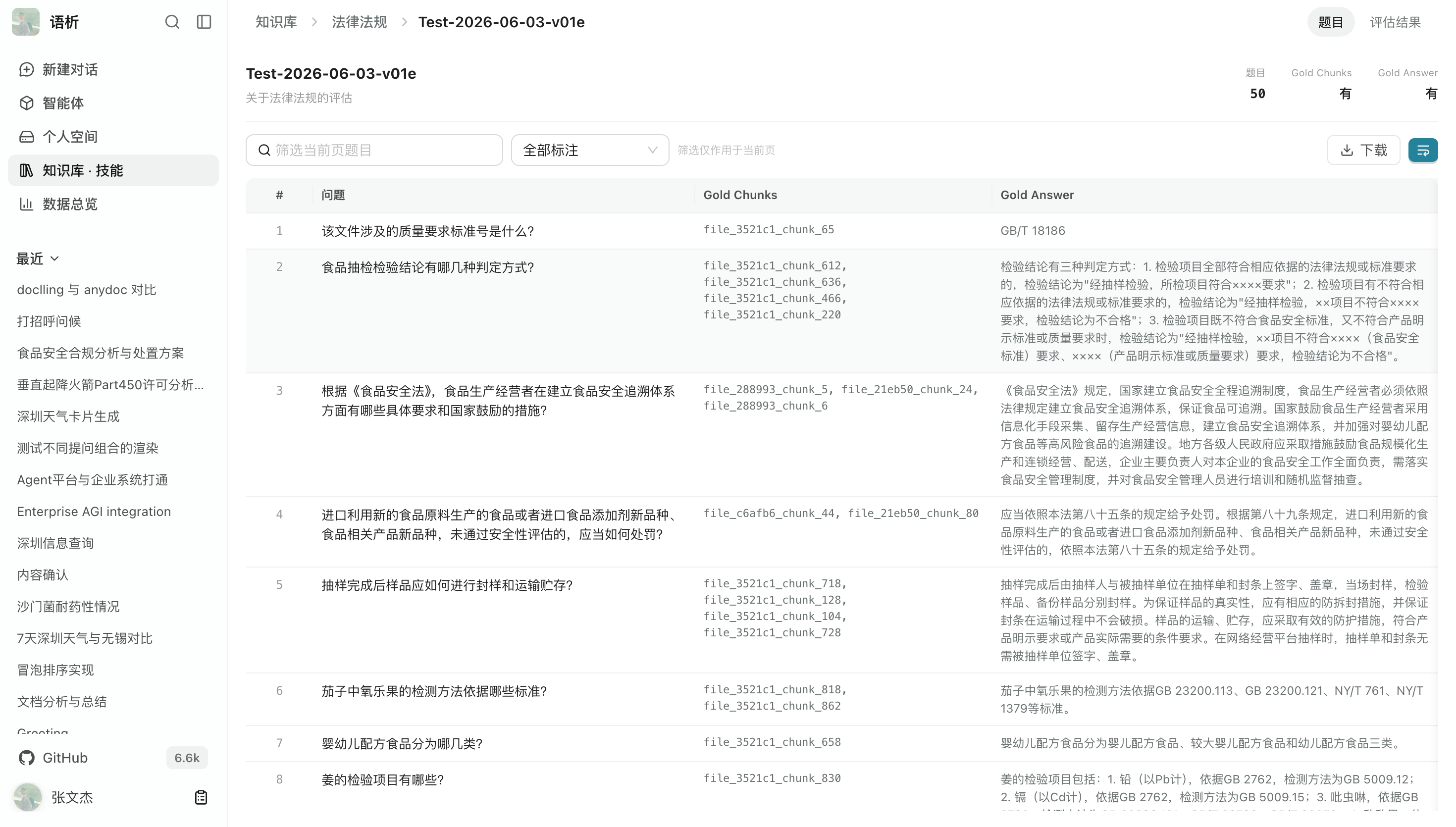
RAG 效果评估
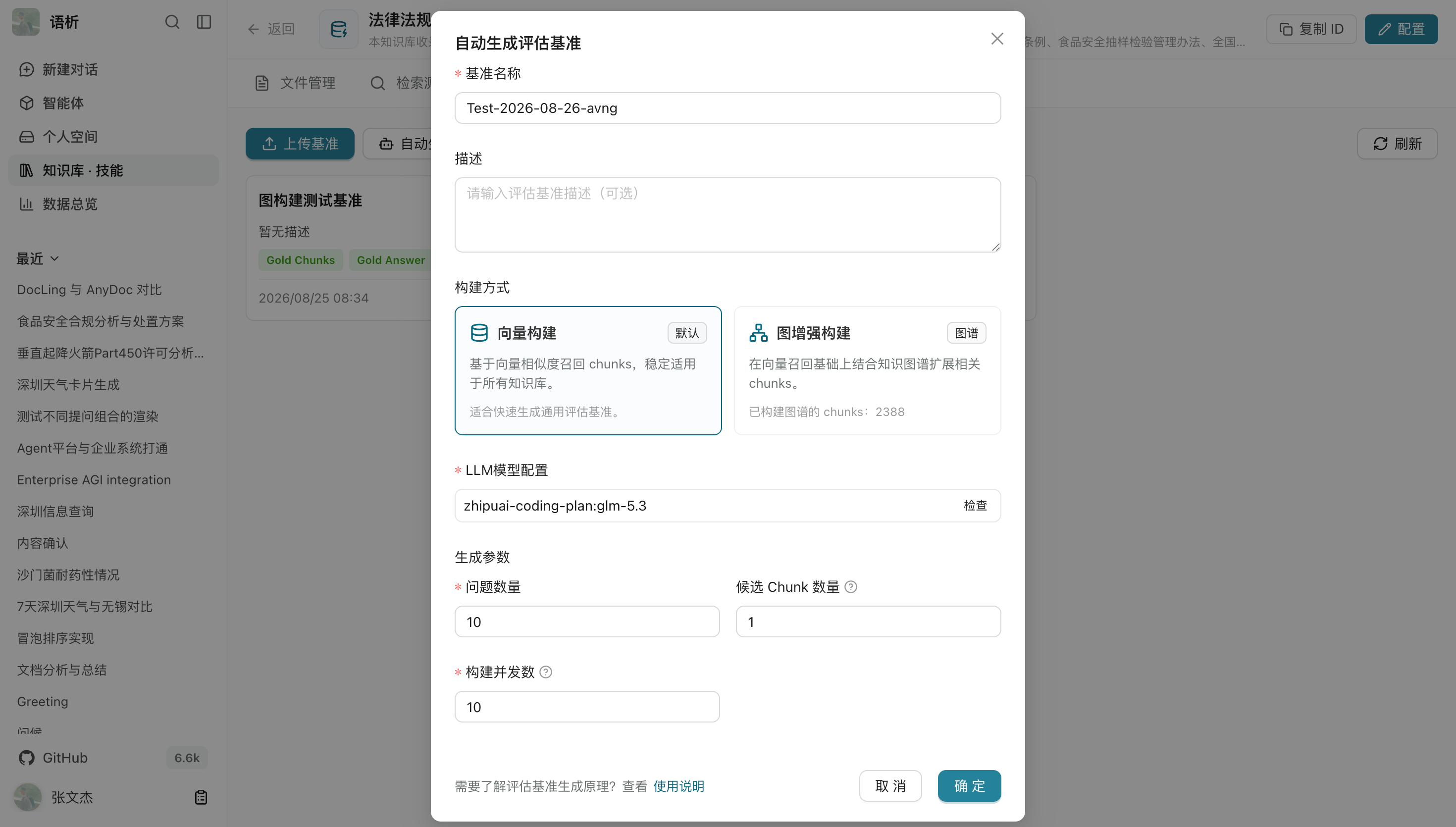
支持构建专属的基准问答评估集,自动批量运行评测并输出检索召回率、答案相关性等量化指标,帮助快速发现知识盲区与配置短板。
自动生成单条 QA 和多跳 QA
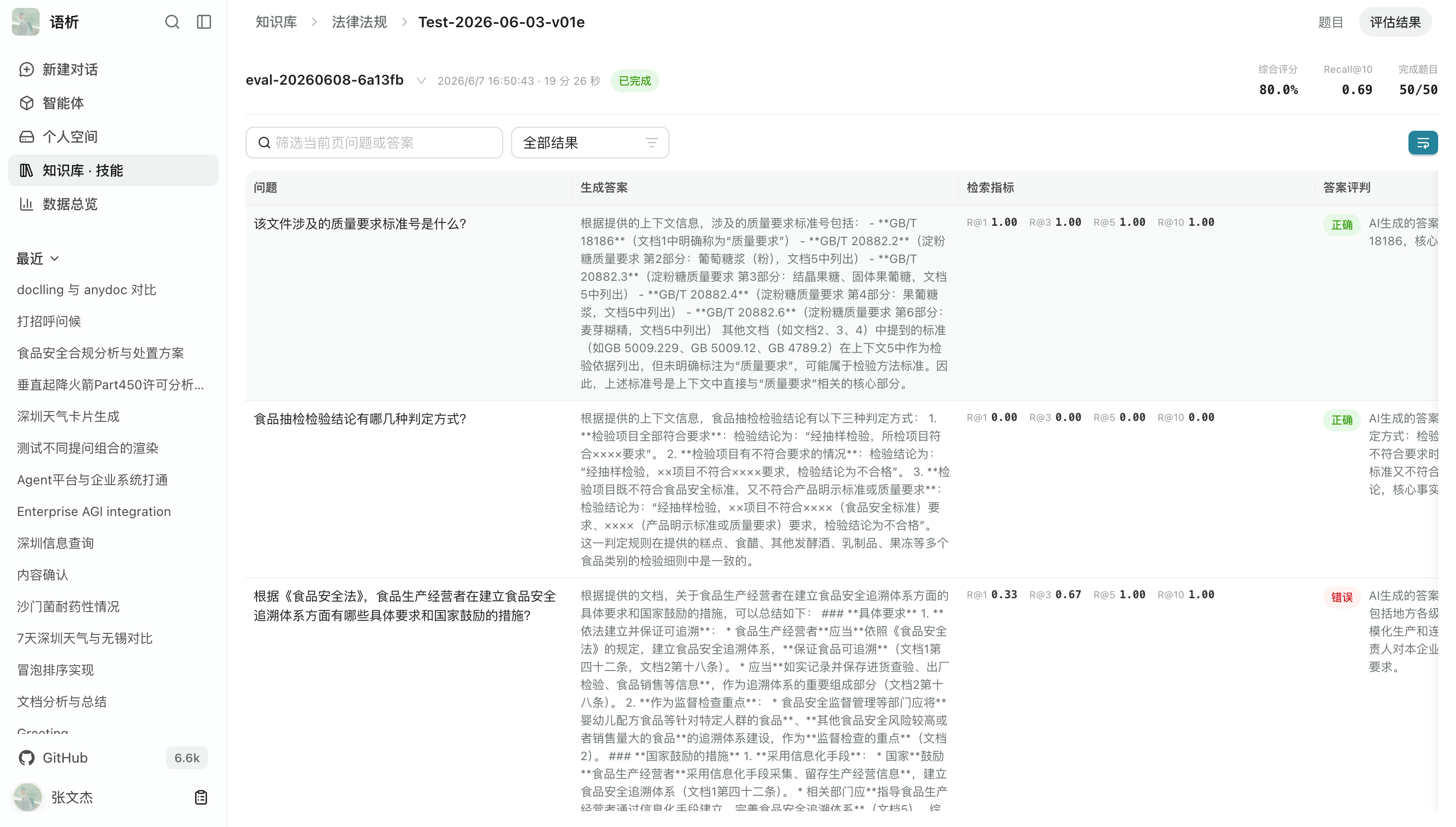
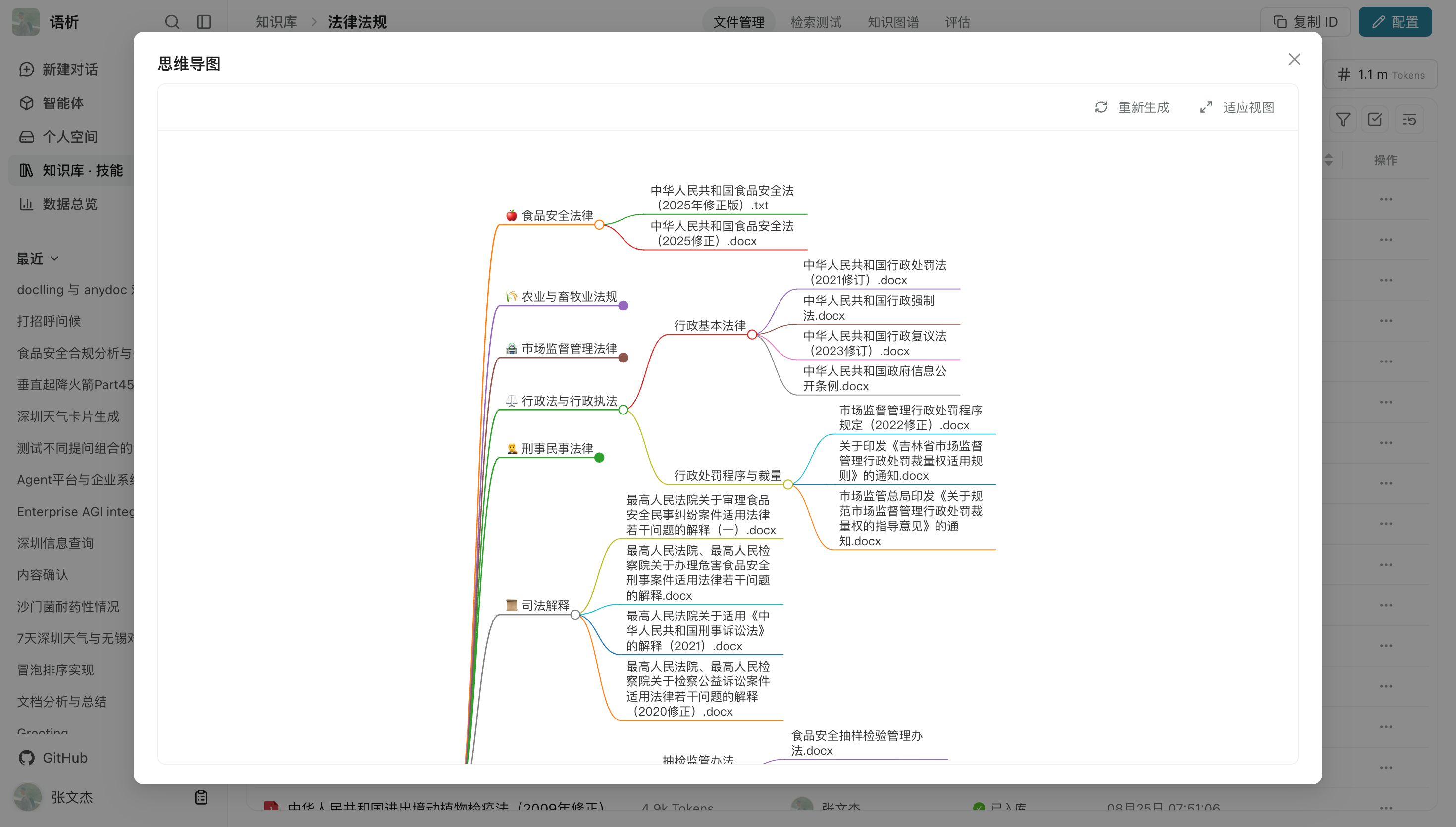
从非结构化文档中抽取实体与关系,构建知识图谱。既支持在交互式拓扑图谱中探索实体关联,也支持根据文件层级和主题元数据自动生成清晰的知识导图。
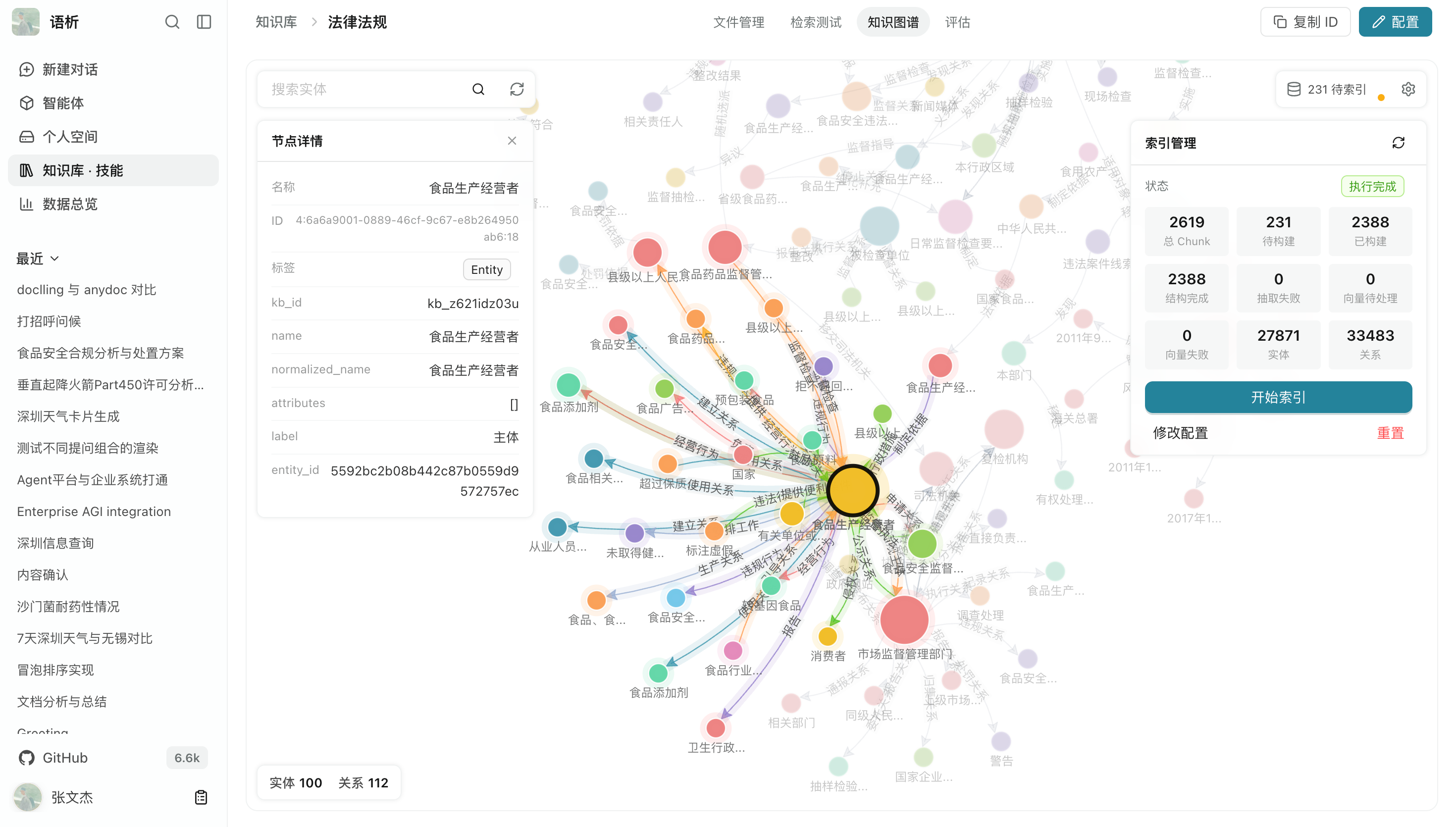
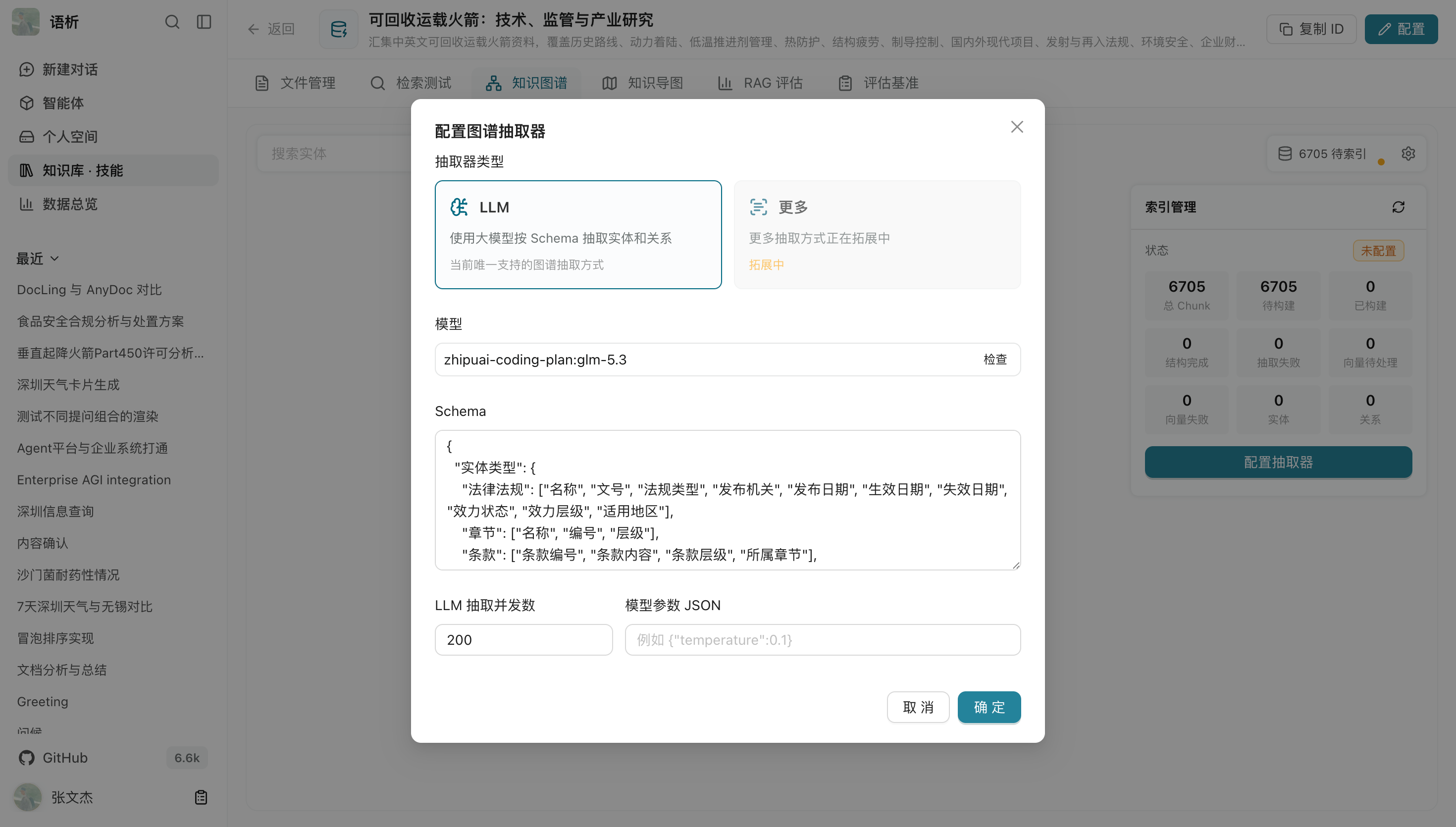
图谱构建与索引状态
解析文档时自动执行实体识别与关系抽取,构建面向具体业务领域的知识图谱。可直观查看实体总数、关系边数量与构建进度。
知识导图
基于文件的目录结构、分类标签与元数据特征,自动生成结构化的主题脑图/知识导图,方便用户以树状脉络快速浏览海量知识内容。
一个 Agent 可以灵活组合模型、提示词、知识库、外部工具与专用子智能体。面对复杂任务,主智能体负责规划拆解,多个 SubAgents 分头异步并行执行,Skills 与 MCP 协议提供能力扩展。
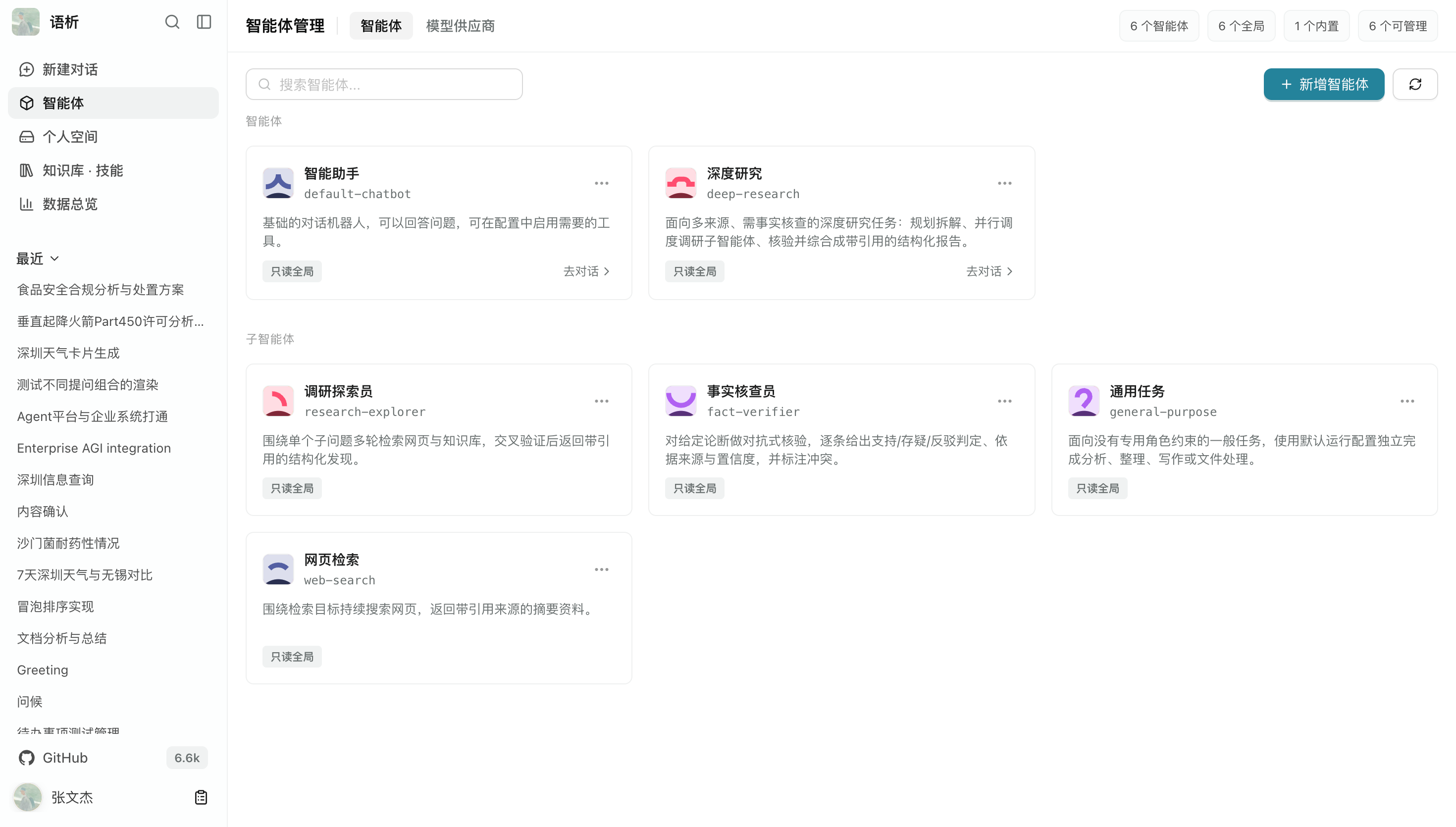
Agent 配置与行为定制
智能体提供丰富的模块化配置项,可以按需组合大模型、挂载的知识库、自定义 Tools、MCP 服务、前置提示词与子智能体,并支持灵活配置在部门或团队内的共享可见范围。
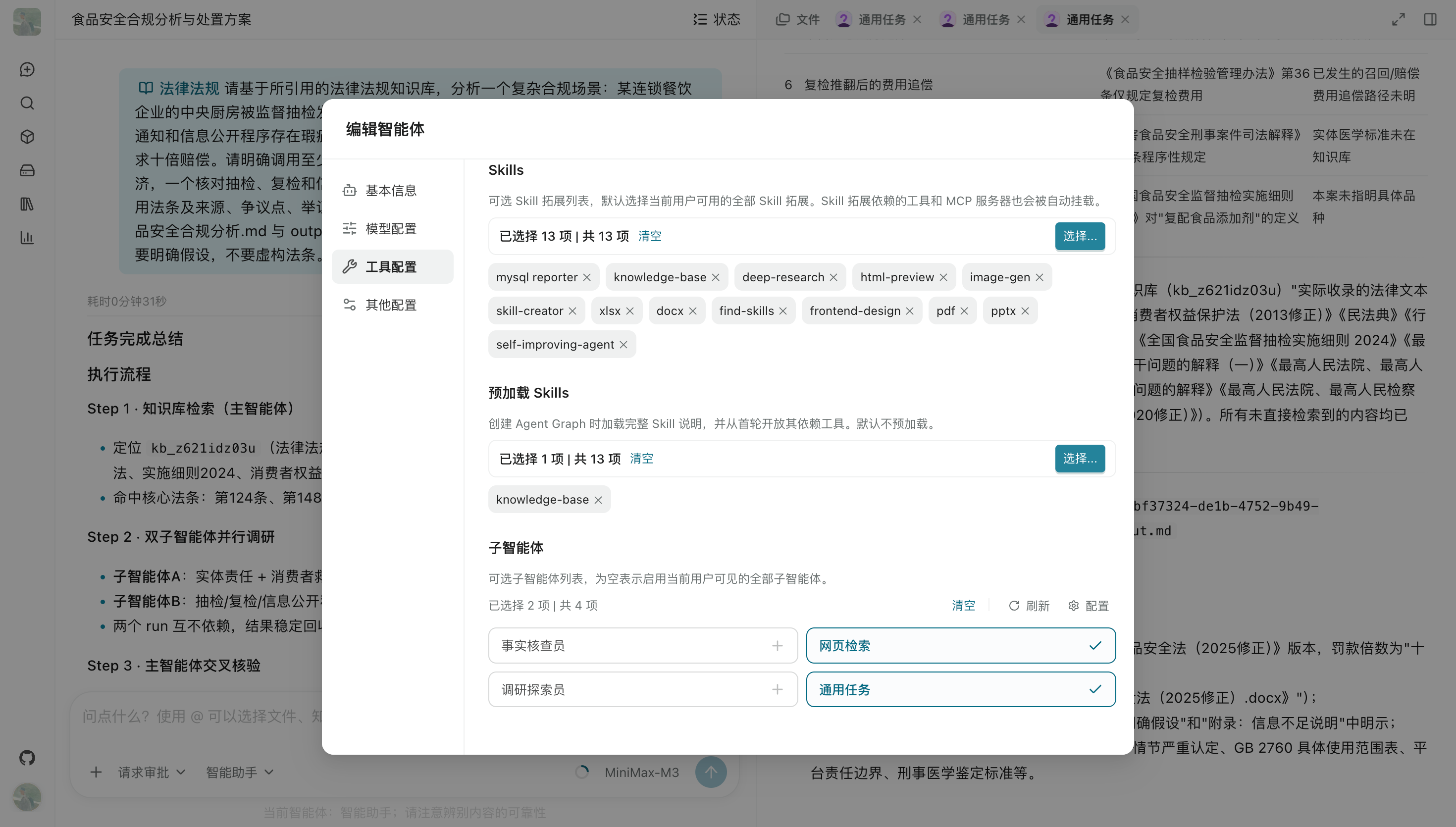
子智能体并行执行
支持主智能体将复杂的多步骤任务拆解后,派出多个专属 SubAgent 异步并行跑任务(例如分头检索不同领域的法规、分别撰写报告不同章节),执行完毕后汇总结果。
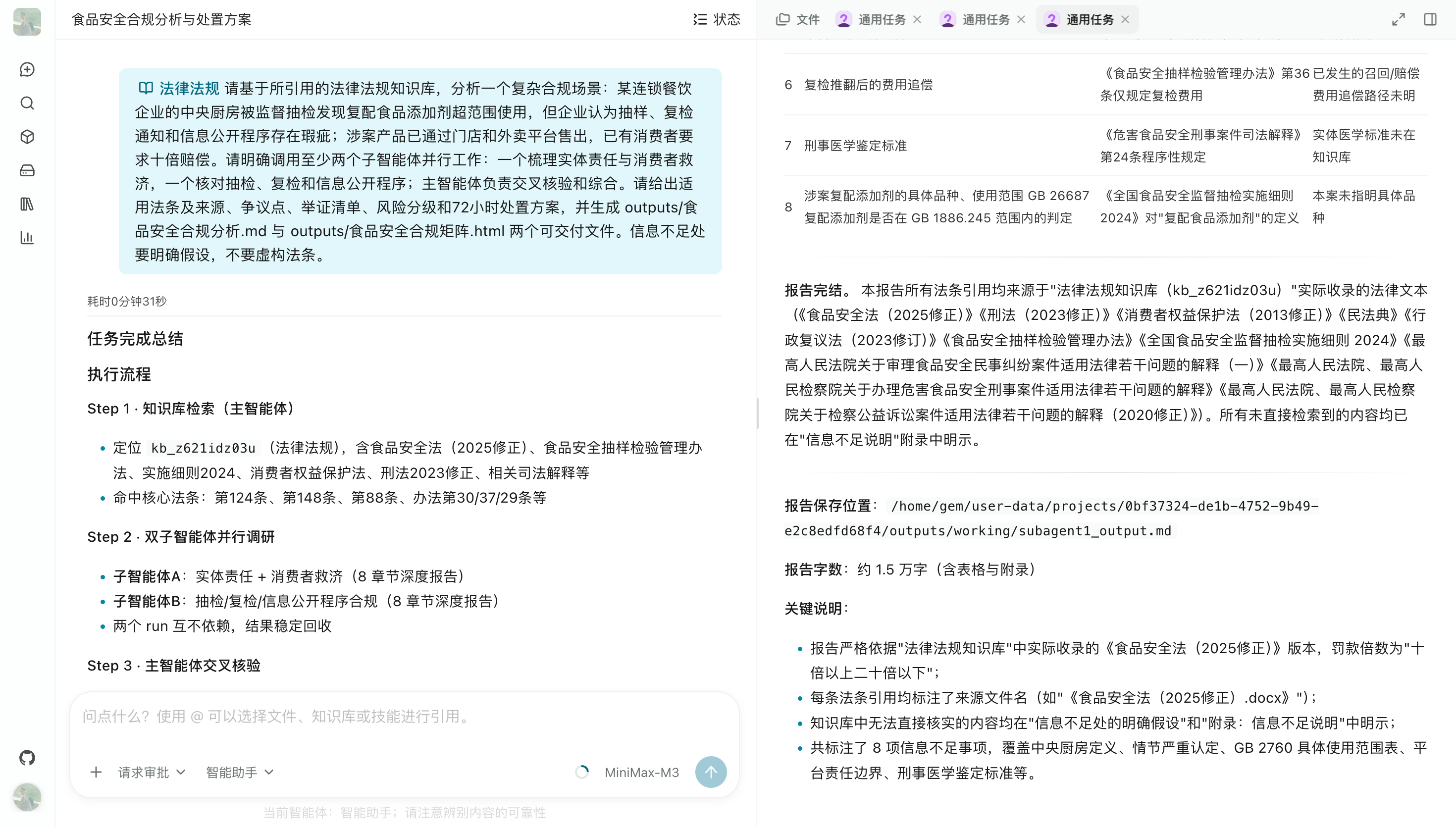
Skills、MCP 与生态扩展
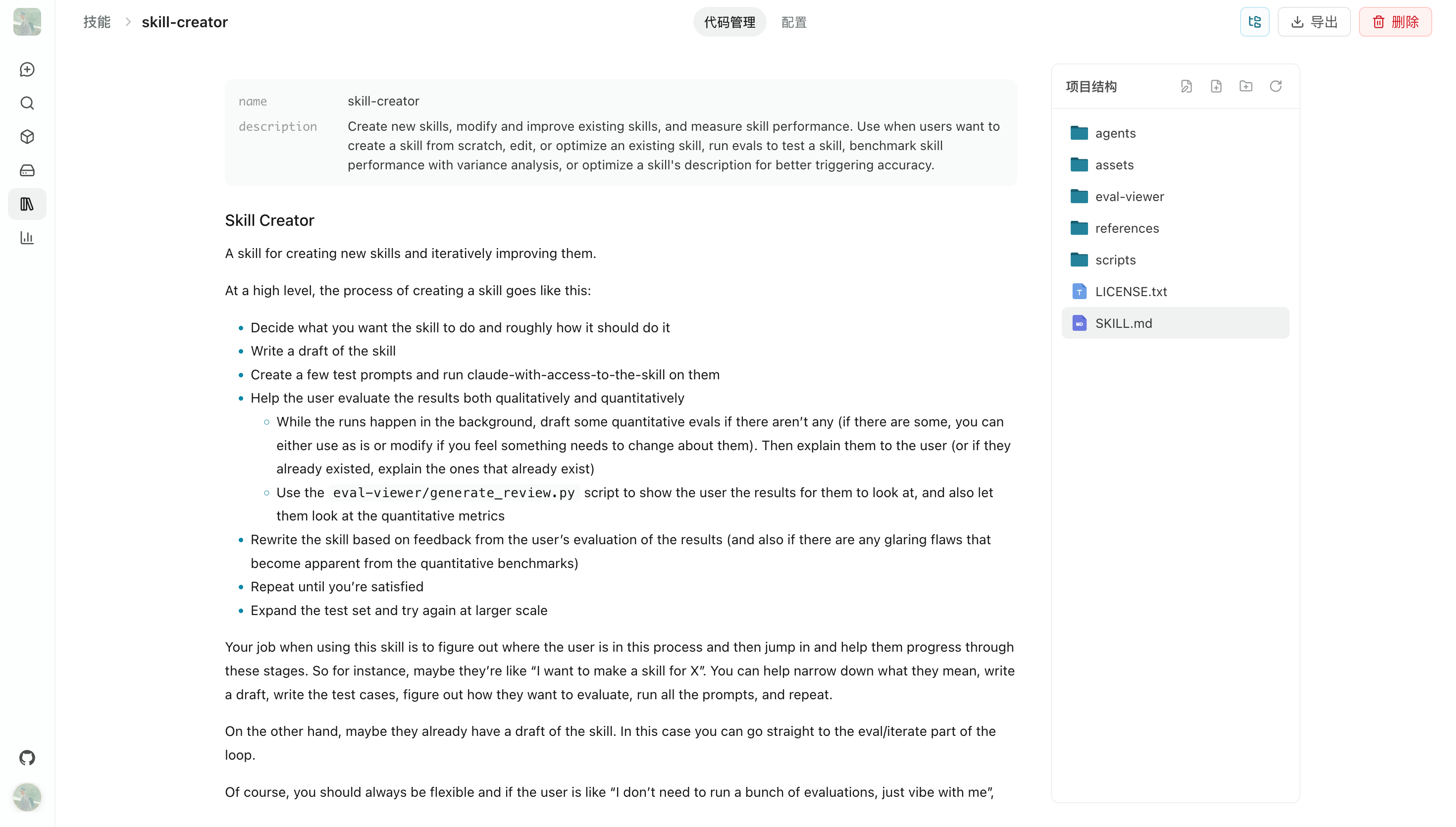
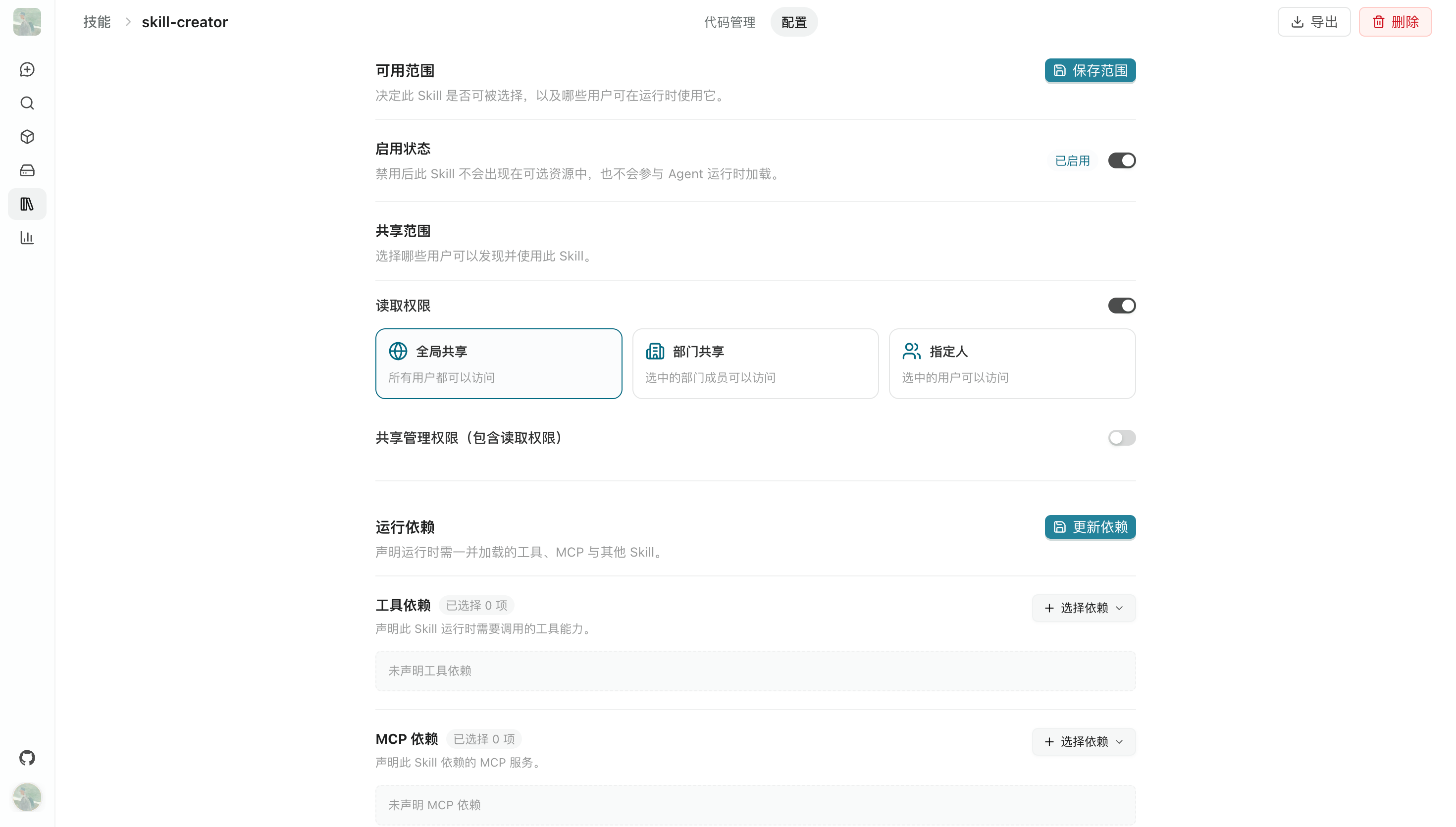
统一接入并管理 Skills 扩展技能与 MCP Servers 外部协议,支持针对不同角色分配权限与使用范围;借助渐进式披露机制,在真正需要时按需动态解析并加载工具。Skill 在线安装支持 skills.sh 以及魔搭社区的 skill。
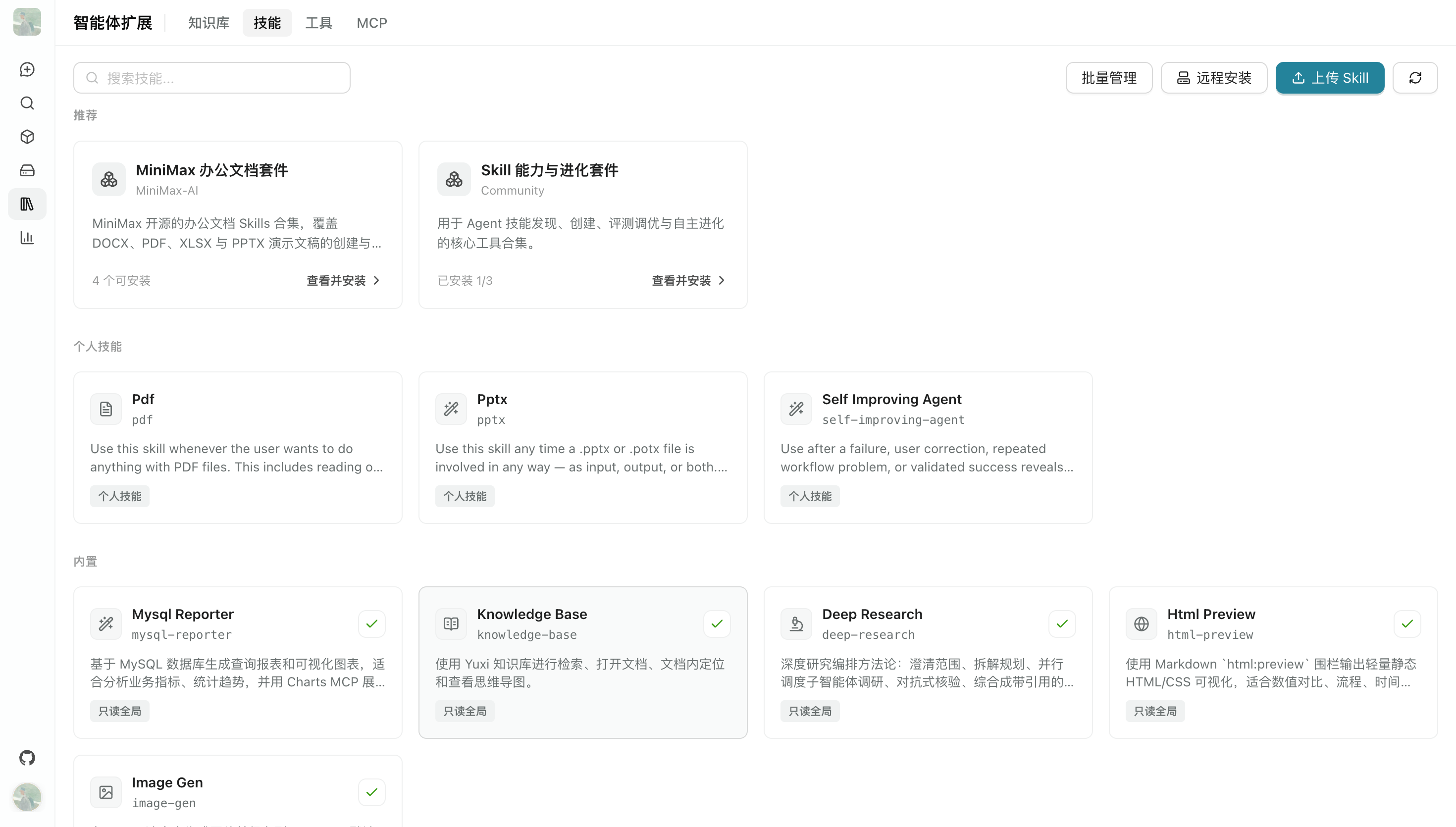
可以查看并在线编辑 skill
可以配置 skill 权限和依赖
内置工具列表
智能体可以通过沙盒工具读写文件。智能体不仅能在对话中回答问题,还能把分析研究成果沉淀为 Markdown 文档、数据表格、HTML 页面或可执行代码,并在工作区中随时查看与下载。
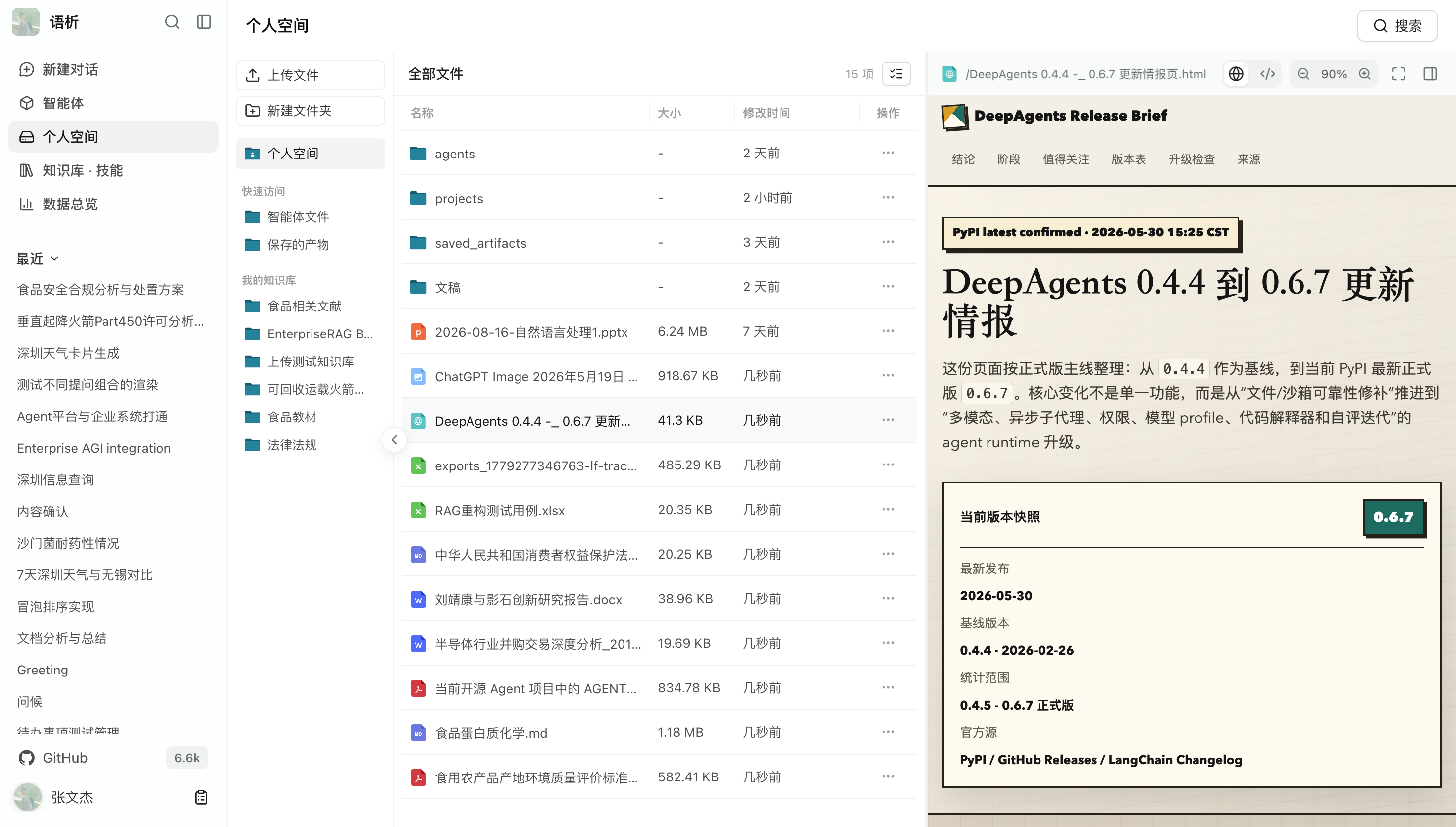
工作区文件管理
可视化管理任务在工作区中读取与产生的文件,清晰展示目录层级、文件类型与体积大小,方便在会话之间复用中间产物。
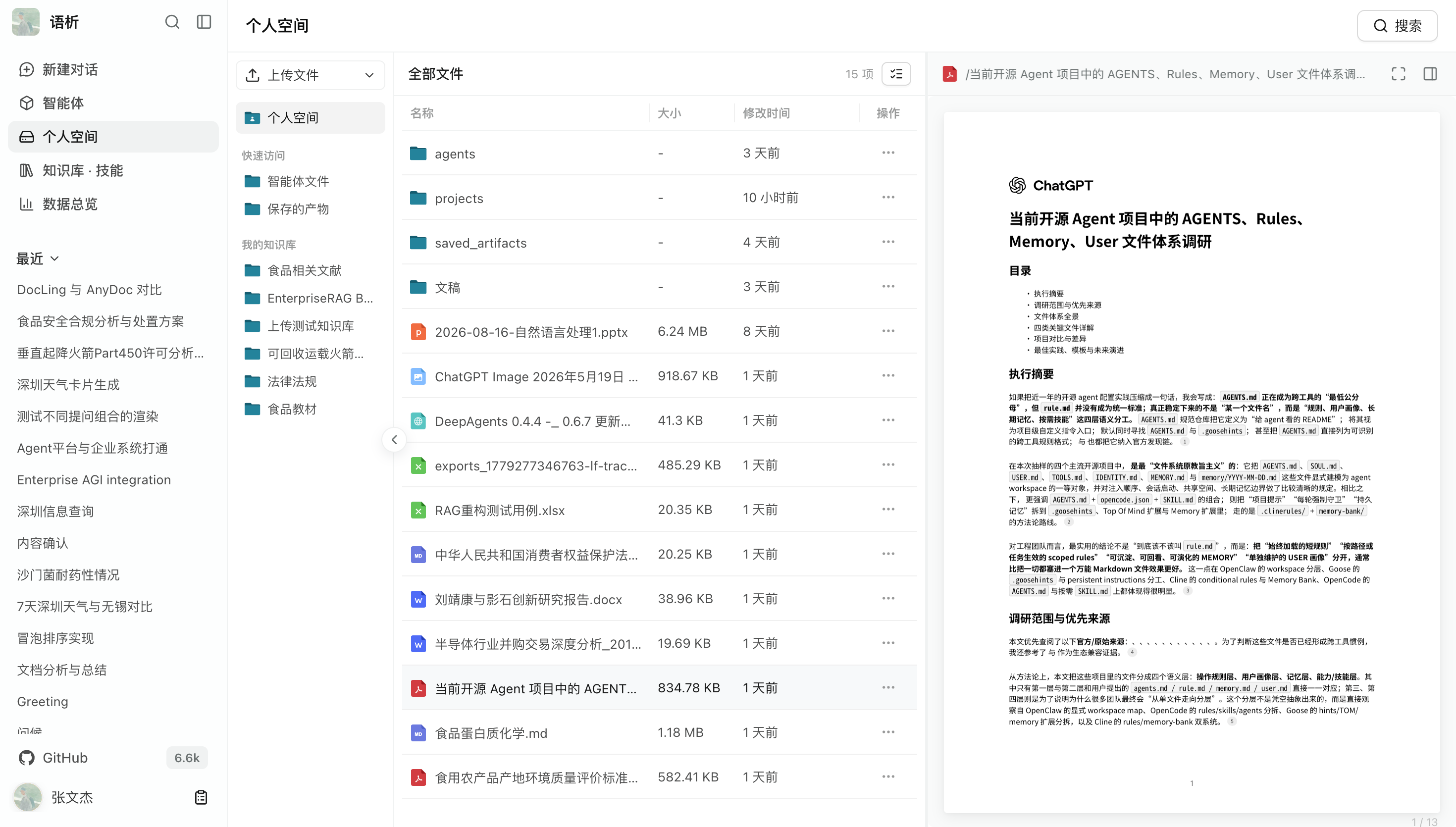
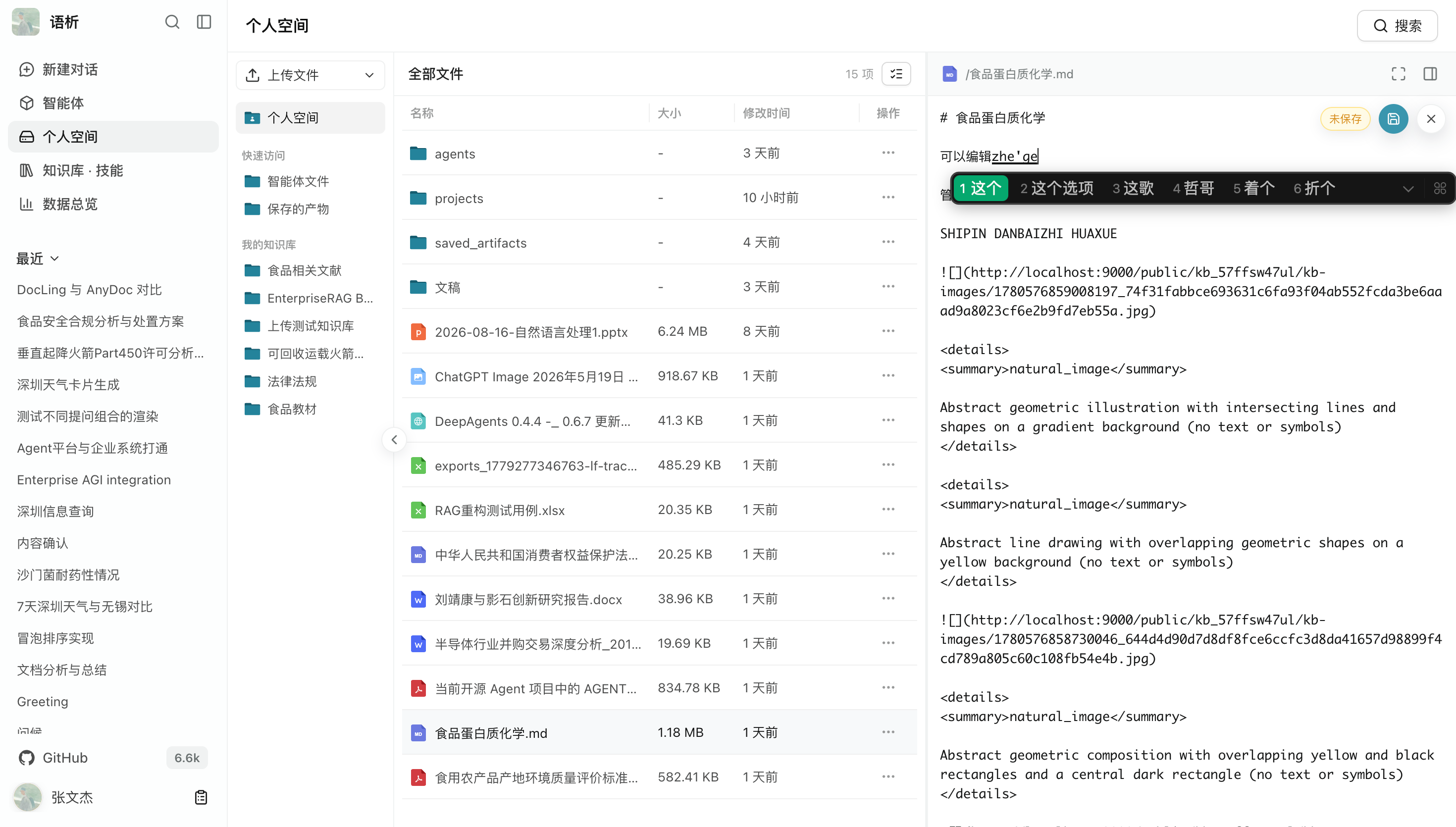
HTML、PDF、图表与代码在线预览
智能体生成的报告文档、可视化 HTML 网页、图片图表或代码脚本,无需下载即可直接在浏览器内置的预览器中渲染并进行交互查看。markdown 还支持在线编辑保存。
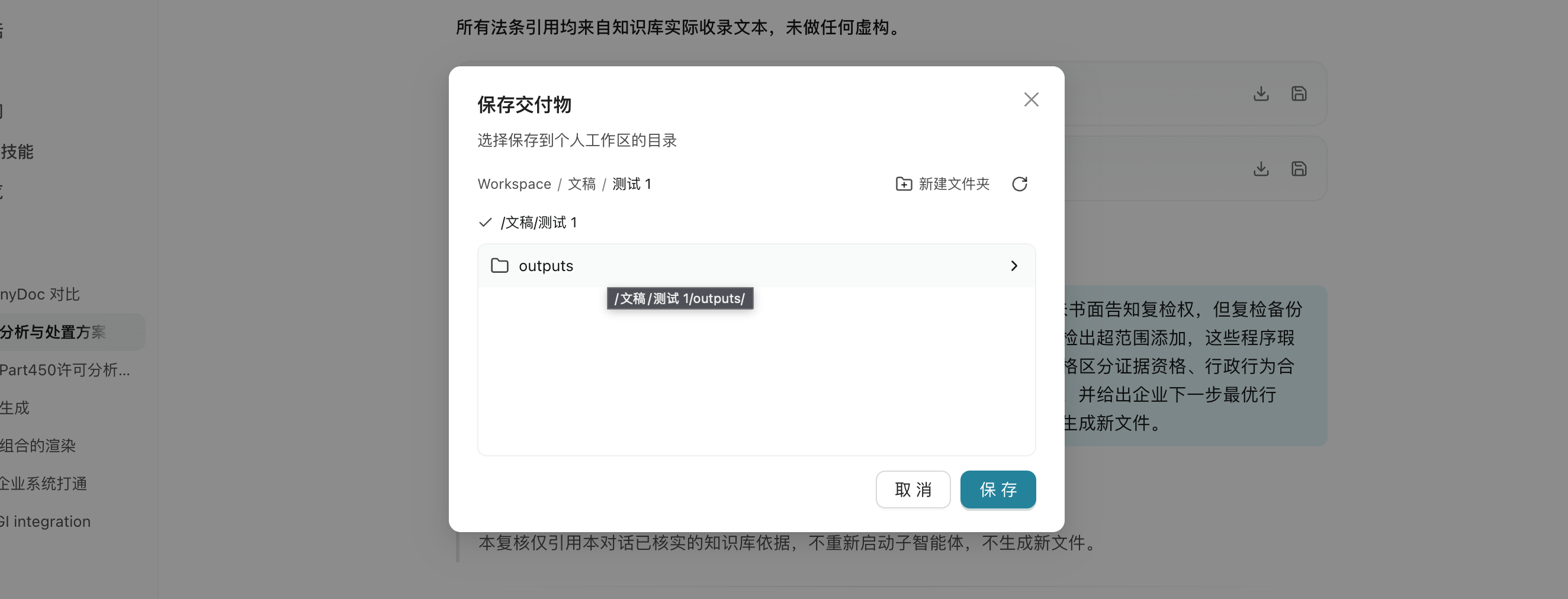
对话中的文件交付
任务执行完毕后,对话气泡中会生成结构化的交付卡片,直观呈现文件摘要、格式与操作按钮,支持直接打开预览或保存到本地。
专为企业和团队多人协作打造。管理员可以集中管理成员与部门组织架构、统一配置模型接入凭据与 API Key,并通过监控看板查看平台的运行状况与调用指标。
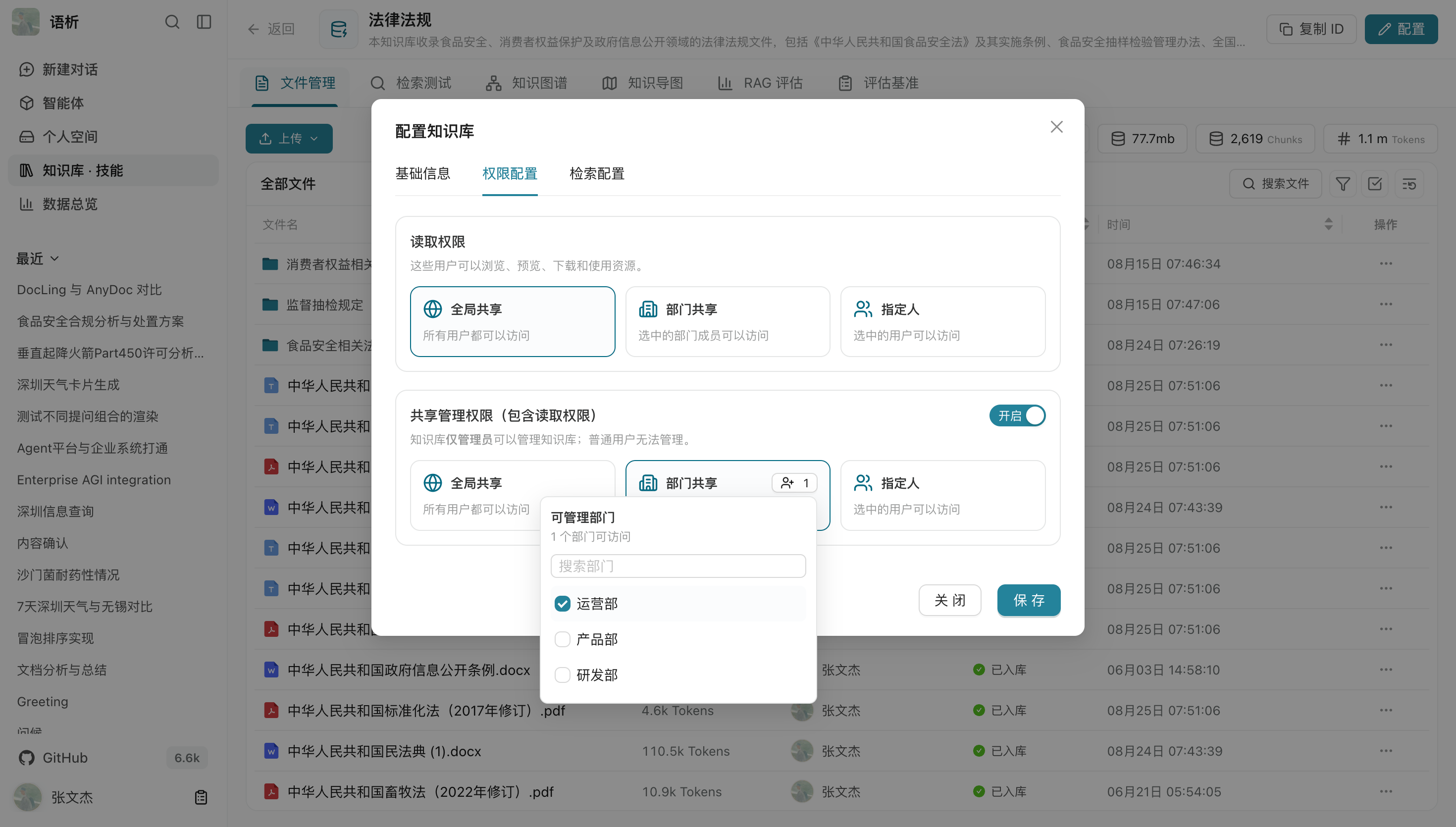
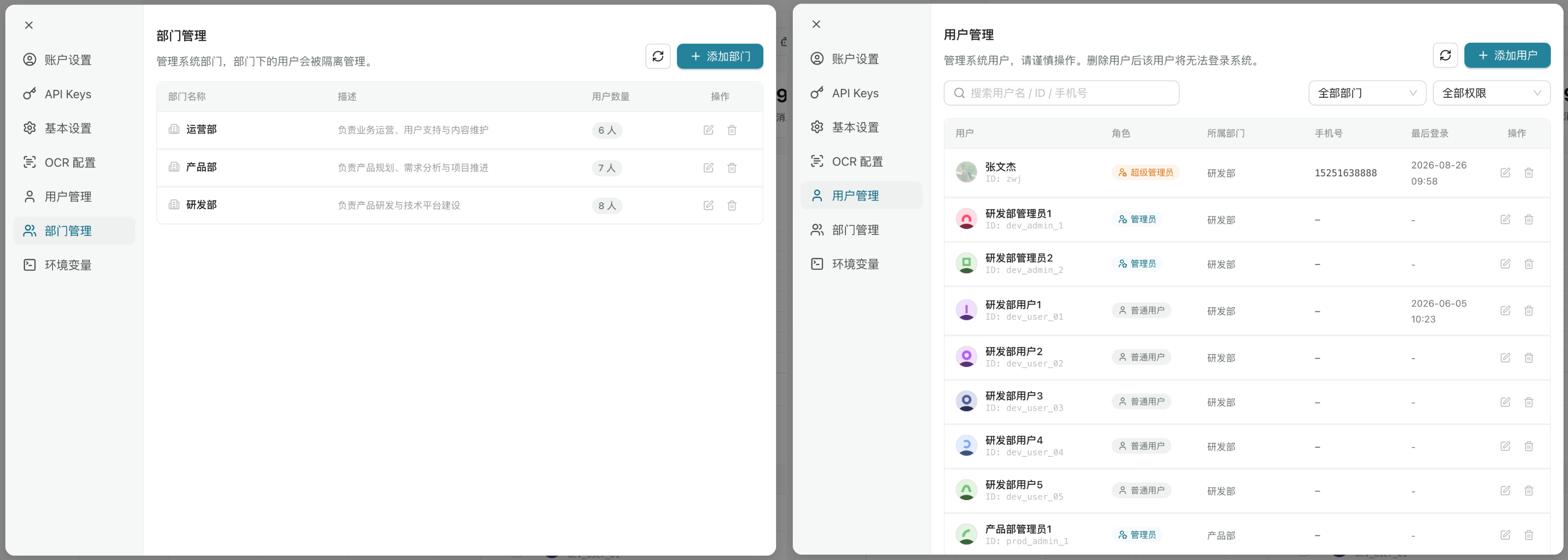
用户、部门与细粒度权限体系
提供符合企业组织架构的多租户权限体系,支持按照部门或用户组精确控制对知识库、智能体、工具和沙盒工作区的访问与编辑权限。
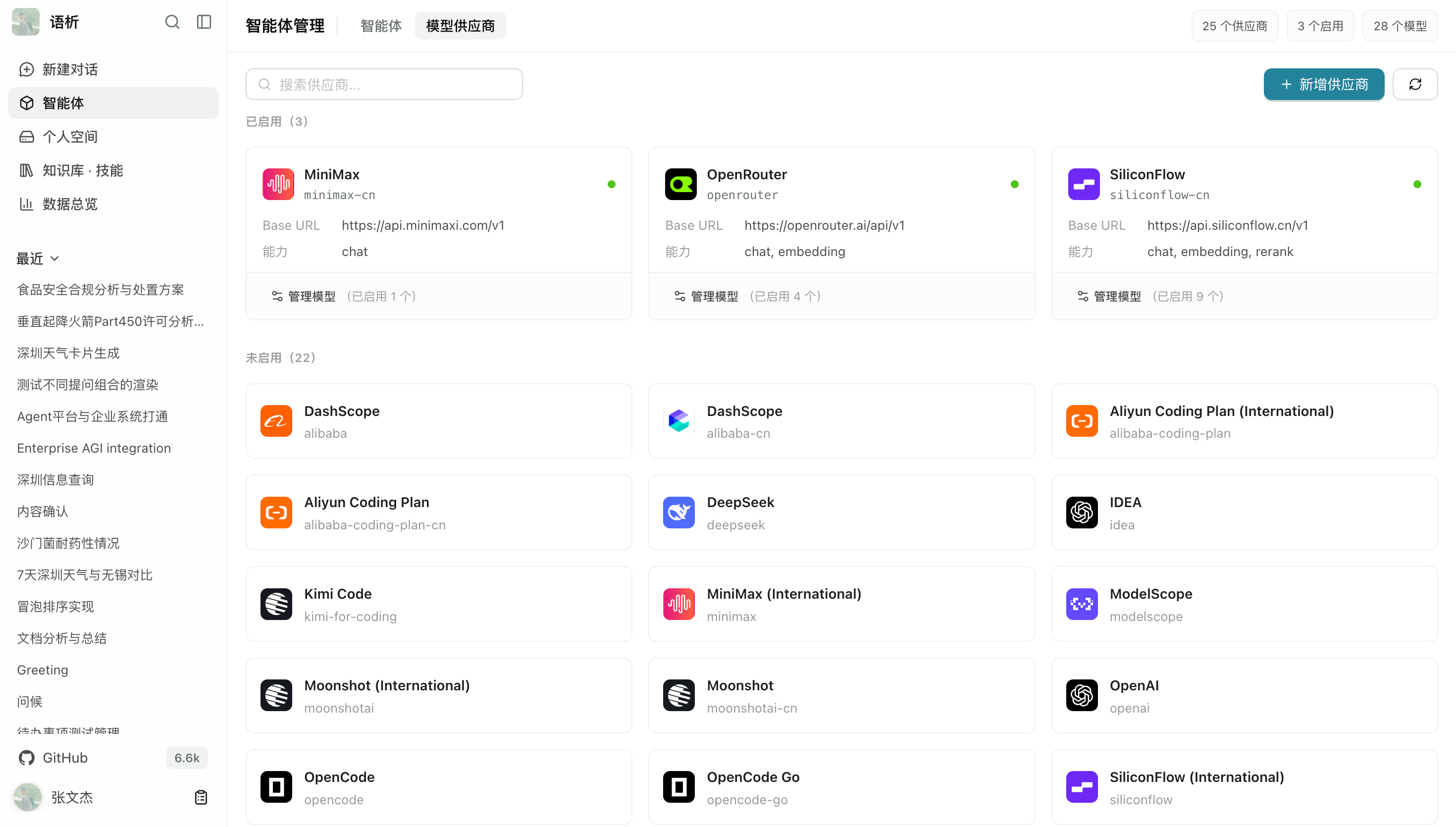
模型供应商与统一凭据管理
支持接入主流大模型供应商(OpenAI、Anthropic、DeepSeek、Qwen 及 OpenAI 兼容自建端点如 vLLM 等),集中维护 API Key 凭据并统一分配模型能力,密钥对普通成员完全脱敏。
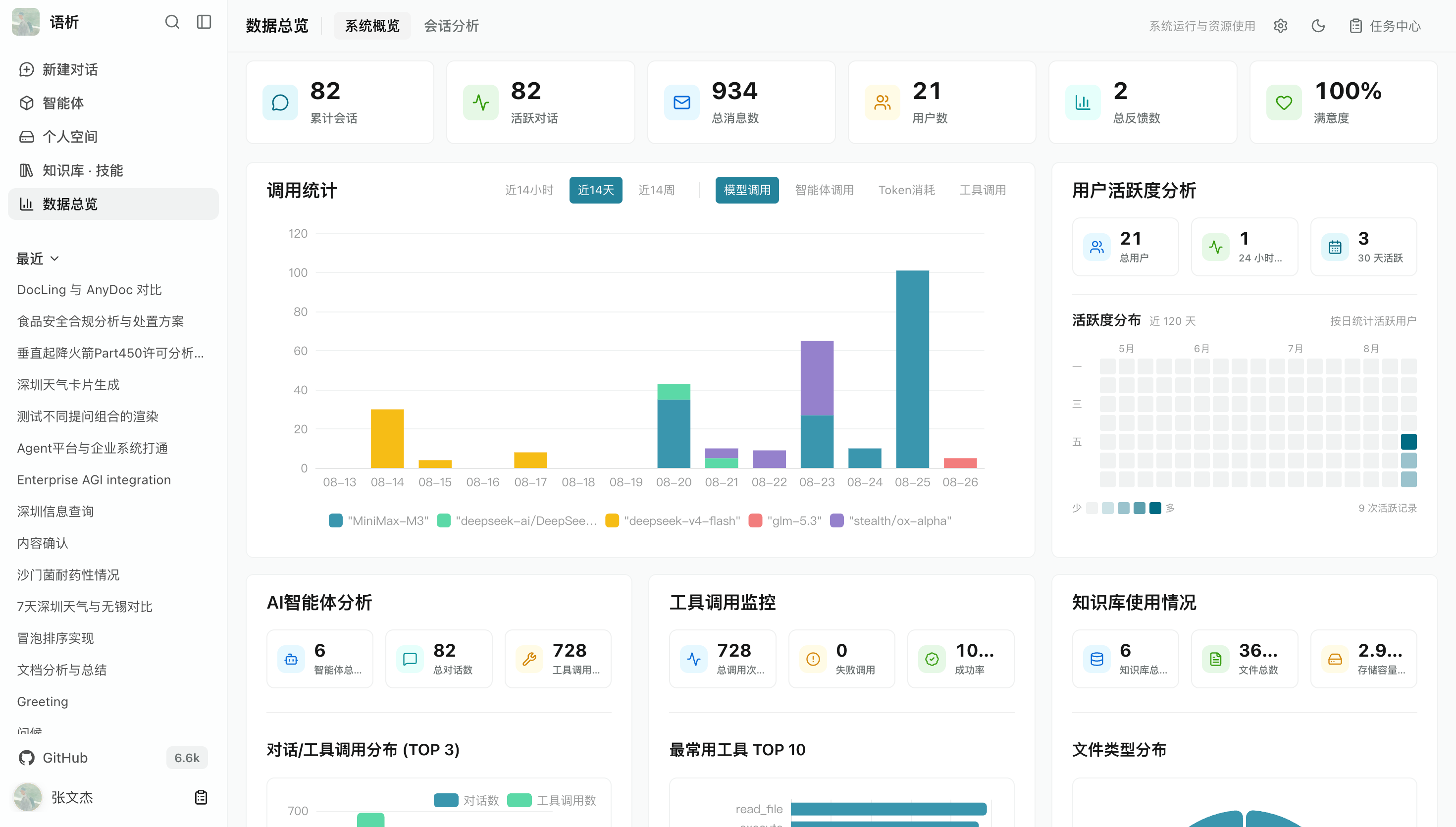
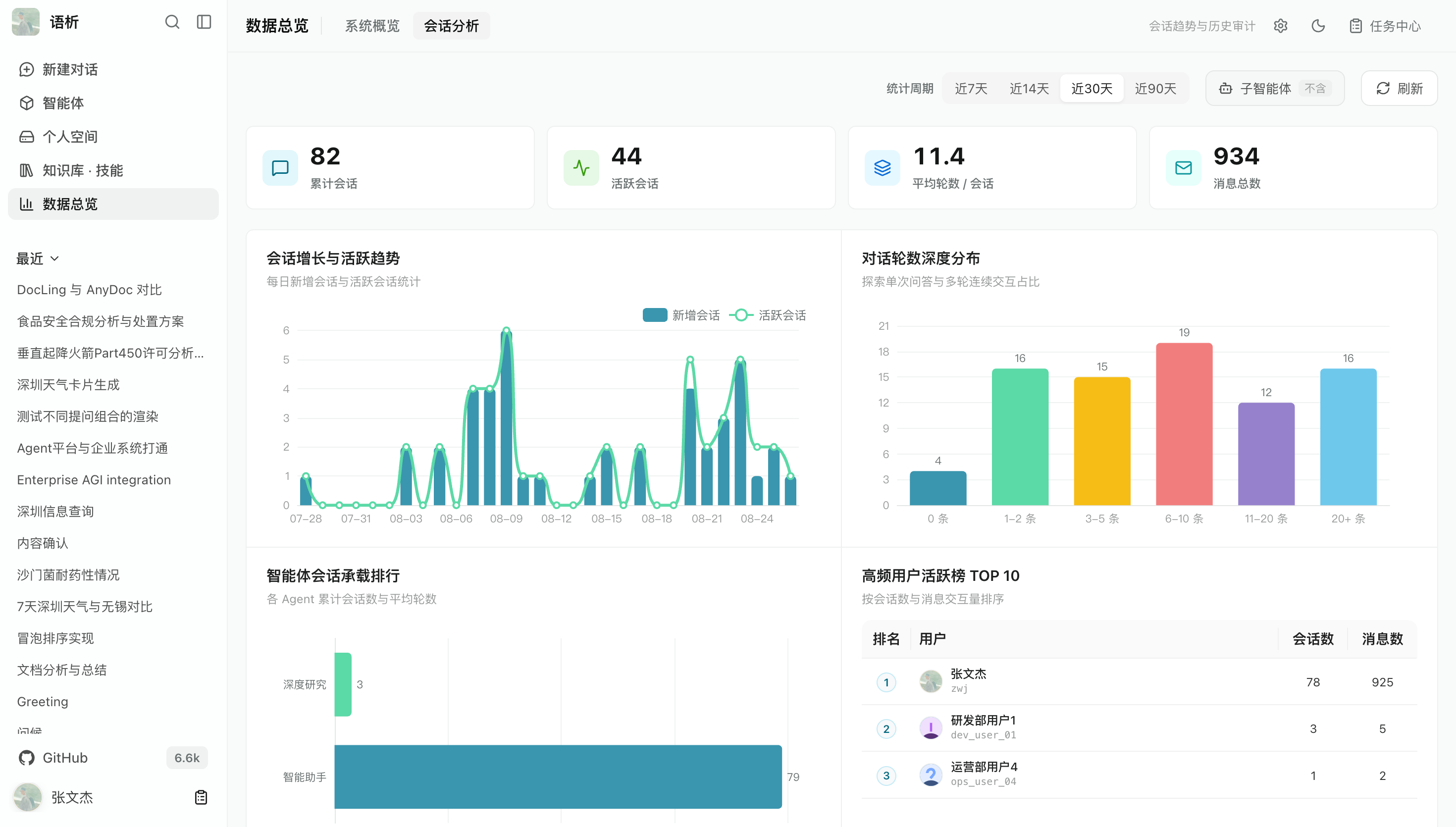
Dashboard 与系统运行监控
直观的运维数据看板,实时展示系统请求量、Token 消耗统计、知识库检索频次与长任务排队状态,为容量规划和成本核算提供数据支撑。
欢迎提交 Issue、改进文档、修复 Bug 和贡献功能。开发流程见 CONTRIBUTING.md,完整规范见 文档参与指南。
感谢所有贡献者的支持!
Yuxi 本体采用 MIT License,详见 LICENSE。Docker Compose 引入的第三方组件遵循各自的许可证;再分发和商业部署前,请按实际镜像版本核对上游许可和源码义务,相关边界见生产部署指南。
Yuxi 的实现和文档参考了以下优秀的开源项目: