 Matt Aitken
bc7bbd4576
Matt Aitken
bc7bbd4576
* Easier to create a rate limiter, use it in the ApiRateLimiter. Upgraded the Upstash package

* Always prefix any rate limiter in Redis with “ratelimit:”

* By default log when the rate limit is hit

* Added rate limiting to IngestSendEvent

* Log out the EventRecord id

* Increase events.deliverScheduled attempts

* INGEST_EVENT_RATE_LIMIT_MAX is optional

* Removed old API rate limit code

* IngestSendEvent rate limiter is optional. Moved outside of the DB transaction

* Log a message out when the rate limiter is created

* Return undefined if the rate limit has been crossed


The Trigger.dev v3 developer preview is now open. For more information and to get early access, check out our developer preview launch post.
About Trigger.dev
Create long-running jobs directly in your codebase with features like API integrations, webhooks, scheduling and delays.
Long running Jobs on serverless
Reliably run jobs and don’t worry about function timeouts, we handle those for you.
- Auto-resume after a function timeout
- Auto-resume after a server outage
- Add delays of up to a year
In your codebase
Create Jobs where they belong: in your codebase. Version control, localhost, test, review, and deploy like you're already used to.
Secure by design
We only receive Triggers and the data you choose to send to us. You can even completely self-host the entire platform.
Don't worry about deployment
Just use our SDK to write Jobs in your codebase. There's nothing extra to deploy and no CI to configure, your Jobs just connect to our cloud. Or you can always self-host.
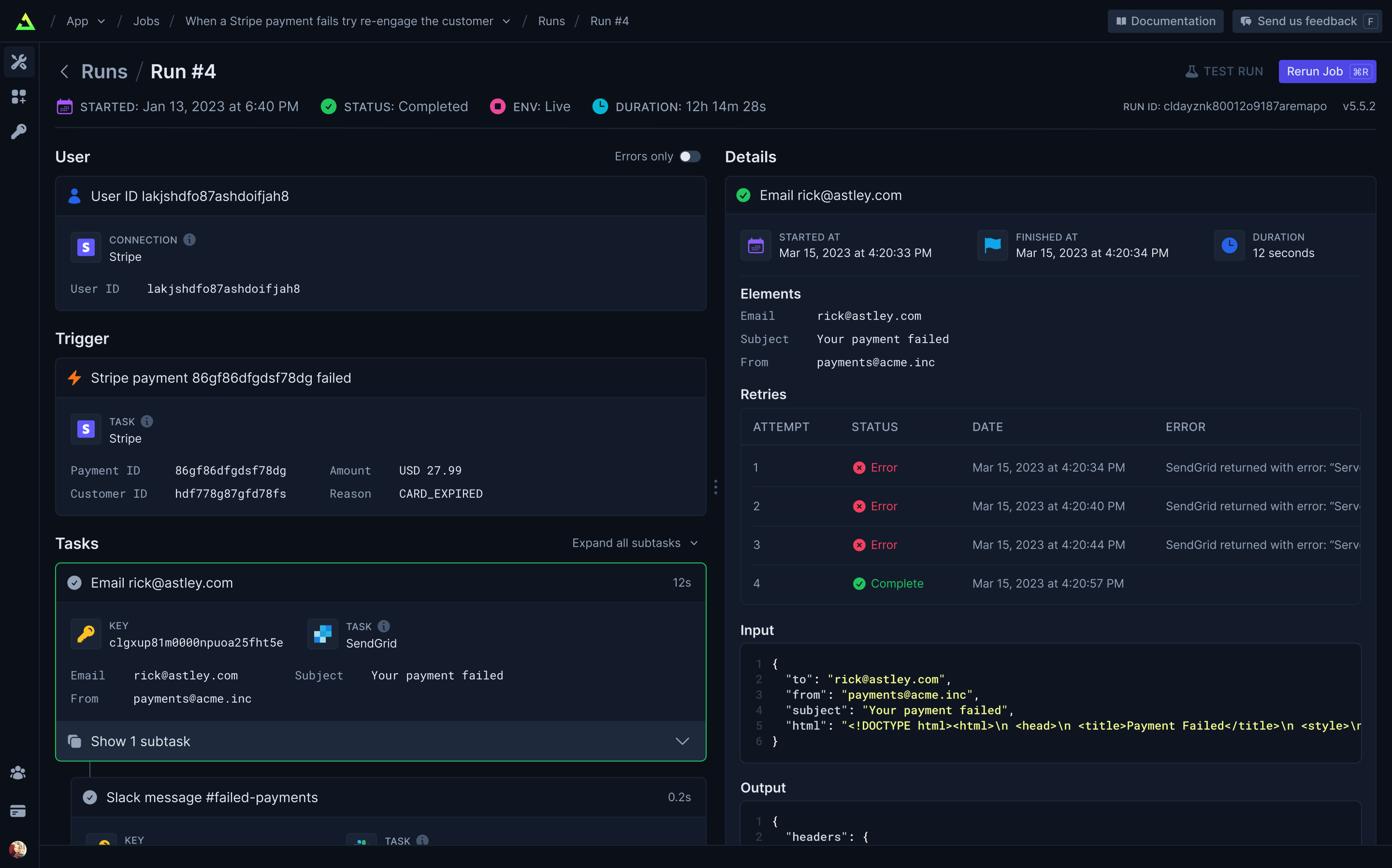
Full visibility of every job run
View every Task in every Run so you can tell exactly what happened.
Built-in integrations
Easily integrate with hundreds of third-party APIs – including your own. Use API keys (which never leave your server) or let us handle OAuth for you. Install our integration packages and easily subscribe to webhooks and perform common tasks, or you can easily use your existing favorite Node.JS SDKs and get resumability and idempotency through our runTask function.
Getting started
Visit our docs here.
Self-host
We provide an official trigger.dev docker image you can use to easily self-host the platform. We're working on more extensive guides but we currently provide a Fly.io example repository with instructions in the README for deploying and using a self-hosted instance of Trigger.dev on Fly.io.
Development
To setup and develop locally or contribute to the open source project, follow our development guide.